

When were security cameras invented? The answer is both surprising and complex—stretching beyond common narratives and revealing a hidden world of early innovation, political secrecy, and technical ingenuity that still shapes today’s surveillance landscape.
Key Takeaways
- The world’s first security camera system was a wireless mechanical CCTV invented by Léon Theremin for Stalin’s Kremlin in 1927.
- The evolution of surveillance technology is driven by real-world threats, technological leaps, and crucial social trends—affecting both effectiveness and accessibility.
- Security cameras have transformed from live-only, institution-grade systems to affordable, AI-enhanced devices that impact everyday crime prevention.
- When Were Security Cameras Invented? Exploring the True Origins
- The Evolution of Surveillance Technology: From Early Experiments to Modern Smart Cameras
- Timeline of Security Camera Inventions: Key Milestones and Breakthroughs
- Major Events That Propelled the History of Security Cameras
- Early and Modern Security Cameras: Limitations, Criticisms, and User Pain Points
- Overlooked Insights: Little-Known Facts from the History of Security Cameras
- Security Cameras Today: How Cost, Access, and Technology Have Changed
- FAQ
When Were Security Cameras Invented? Exploring the True Origins
Most people believe security cameras are a mid-20th-century innovation. In reality, their roots are deeper and more discreet than you might expect. The very first security camera was not a commercial business tool but a top-secret Soviet invention: in 1927, Russian scientist Léon Theremin built a wireless, mechanical closed-circuit television (CCTV) system to monitor VIP visitors within the Kremlin for Stalin’s regime. This predates common Western surveillance by decades and placed the technology’s origins firmly in the realm of political control and high-security paranoia.
Theremin’s system was kept classified for decades and only emerged in historical archives much later. This raises a challenging question: who invented the first security camera? Marie Van Brittan Brown’s 1969 U.S. patent is often cited, but it was Theremin who brought the idea to life, albeit in secrecy. Brown, however, pioneered the home security camera with a peephole-and-monitor system that remains influential today.
If you want a deeper look at CCTV history, our full guide to the history of CCTV systems covers the changing role of video surveillance in both public and private sectors.
The Evolution of Surveillance Technology: From Early Experiments to Modern Smart Cameras
Surveillance technology didn’t leap straight from secret government projects to the compact, AI-driven cameras we use today. Its evolution involved decades of technical hurdles, paradigm shifts, and market adaption. This journey maps how security cameras went from mechanical and live-only to the digital, cloud-connected devices that define the current development of CCTV.
The technical journey began with the 1927 mechanical and entirely wireless system used in the Kremlin. In the 1940s, Nazi military engineers under Walter Bruch deployed wired CCTV to monitor V-2 rocket launches—a move quickly adopted by U.S. defense programs. The first commercial CCTV system arrived in 1949, selling to banks and institutions for live-only security with no recording ability. A desktop-sized breakthrough came with the Ampex VR-1000 in 1956, the first reel-to-reel videotape recorder—including for surveillance—costing $50,000 per unit. This enabled security events to be reviewed after the fact, a critical leap from live-only monitoring in the development of CCTV.
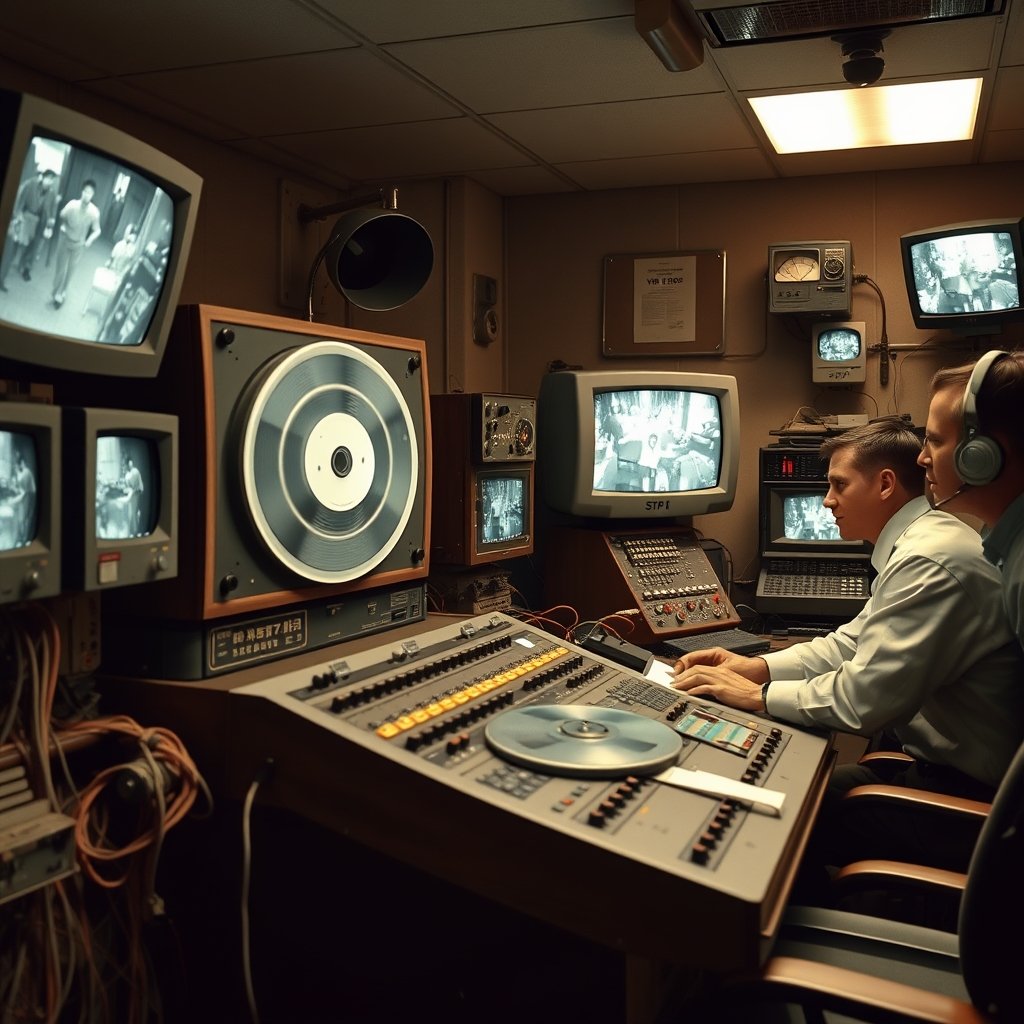
Over the subsequent decades, advances in sensor technology (like the 1976 charge-coupled device, CCD, for low-light operation), miniaturization, and digital recording pushed security cameras from institutional exclusivity into daily civilian use. The late 20th-century saw digital video recorders (DVRs), networked IP cameras, and wireless consumer devices lower costs and raise expectations on image quality and ease of access.
Modern systems—such as the ones explored in our smart home security breakdown—now use cloud storage, AI-powered event detection, smartphone access, and end-to-end encryption. A typical homeowner or organization can deploy systems in minutes, not days, and access a global ecosystem of security innovation.
Timeline of Security Camera Inventions: Key Milestones and Breakthroughs
Understanding the timeline of security camera inventions is essential to see just how quickly the sector advanced after its secretive birth. Here are crucial milestones that shaped the history of security cameras:
- 1927: Léon Theremin invents the first wireless CCTV for Kremlin surveillance (source).
- 1942: Walter Bruch develops Nazi CCTV to monitor V-2 rocket launches—a template for military-grade surveillance (source).
- 1949: Vericon releases the first commercial CCTV system for business premises; live only, no recording.
- 1951-1956: Ampex videotape recorders arrive, with the VR-1000 costing $50,000 and enabling recordable footage.
- 1966-1969: Marie Van Brittan Brown files and receives a patent for the first home security camera and intercom system.
- 1968: Olean, New York, becomes the first city in the United States to install street CCTV—establishing municipal surveillance (source).
- 1973-1976: Urban police (Munich) and technical advancements (CCD sensors) usher in new applications and low-light capability.
- 1970s-2000s: VCRs, then DVRs, IP cameras, and wireless transmission democratize surveillance. Widespread urban deployments begin.
- 2020s: Wireless cameras, HD video, AI alerts, and cloud storage are nearly universal; systems can cut city crime by 60% in successful implementations (source).
This rapid evolution is mirrored in real-world deployments—see how cities and businesses accelerated adoption in our practical case study collection.
Major Events That Propelled the History of Security Cameras
The history of security cameras is deeply shaped by global events that forced rapid adoption and technical improvement. Theremin’s 1927 Kremlin system addressed the need for silent, covert observation at the heart of Soviet power. By 1942, war-fueled innovation in Nazi Germany meant CCTV was essential to rocket test site safety—this model was quickly copied by the U.S. military for missile and atomic test monitoring.
Public spectacles like Queen Elizabeth II’s coronation in 1953 (broadcast via monitored cameras) gave the public a preview of CCTV’s potential reach. Back in the U.S., the 1960s saw rapid urban crime spikes. In 1968, Olean, New York launched municipal CCTV, while Marie Van Brittan Brown developed her home system in crime-ridden Queens—both responses to persistent threats.
By the late 20th century, terrorism, urban unrest, and technological advances brought security cameras into shopping centers, airports, and thousands of homes. Modern events—from 9/11 to the rise of “smart cities”—have made video surveillance a global expectation, not an exception.
Early and Modern Security Cameras: Limitations, Criticisms, and User Pain Points
No technology evolves without stumbling blocks. Early security camera systems, for all their ambition, faced stark restrictions and user pain points that would shape the development of CCTV for generations:
| Era | Main Limitations | User Experience | Major Criticisms |
|---|---|---|---|
| 1927–1950s (Early) | No recording (live only), black–white, fixed wired/wireless, high cost | Bulky setups, constant monitoring, limited coverage | Expensive, impractical, security theater over utility |
| 1960s–1990s | Limited storage/review, no automation (motion alerts), video grainy, privacy questions begin | More feasible for businesses/cities, not for homes | Slow police response, privacy fears, footage loses value if not constantly reviewed |
| 2000s–Today | Privacy legislation, hacking/data breaches, over-reliance on “passive” monitoring | Simple installation, instant alerts, broad access | Civil liberties concerns, alerts can be overwhelming, maintaining data integrity |
Early commercial systems could only stream live footage in black and white without recording, cost thousands, and demanded continuous human attention. Even as digital innovations made systems more affordable, new problems emerged—privacy, cyber-security, and over-reliance on “always-on” video feeds.

If you’re considering an upgrade, check out our top-rated AI security cameras guide for solutions that address both technical and ethical pain points.
Overlooked Insights: Little-Known Facts from the History of Security Cameras
Competing articles seldom dig beneath the surface of security camera history, missing crucial details that add color and context to the evolution of surveillance technology. Here are three little-known facts you should not miss:
- Theremin’s Secret: Léon Theremin’s 1927 invention was not only wireless—a radical concept for the time—but also used then-cutting-edge mechanical television, and remained classified Soviet technology for decades (source).
- Pre-CCTV Imaging: Devices like Eadweard Muybridge’s late 19th-century zoopraxiscope were originally developed to analyze movement frame-by-frame. They laid groundwork for visual documentation and analysis—blurring the lines between photography and proto-surveillance.
- The VTR Cost Barrier: The Ampex VR-1000 of 1956—desk-sized and $50,000 apiece—was one of the first technologies to actually record surveillance video, not just stream it live. This was the key step toward scalable monitoring and evidence gathering.
Our guide to CCTV’s hidden stories spotlights other remarkable but neglected milestones powering today’s smart camera movement.
Security Cameras Today: How Cost, Access, and Technology Have Changed
The history of security cameras is also a story of democratization. What once required government clearance—or institutional budgets—has become a consumer technology. While the desk-sized VR-1000 videotape recorder cost $50,000 in 1956, today’s wireless home security cameras cost as little as $50 and often support 1080p HD, night vision, mobile streaming, real-time cloud backup, and AI-driven alerts.
Installation, which once meant pulling miles of cable, now often requires only Wi-Fi and an app. Homeowners, small businesses, and even renters have access to security options that national governments could only dream of decades ago. In cities that have embraced networked, smart camera deployment, crime rates have dropped by as much as 60%—a testament to both deterrence and evidence-gathering power.
For a full breakdown of today’s market and choosing the right system for your needs, visit our modern security camera buying guide.
Conclusion
The invention of security cameras was driven by secrecy, necessity, and technical brilliance—well before mainstream adoption. From Léon Theremin’s 1927 Kremlin system, through landmark moments of military and public crisis, right up to the AI-powered, wireless systems of today, each stage has responded to changing threats and opportunities. Learning when were security cameras invented helps set context for both skeptical buyers and ambitious technology planners. Ready to fortify your property or future-proof your business? Explore our best guides and contact us for a custom consultation today.
FAQ
Who invented the first security camera?
The first documented security camera was invented by Russian scientist Léon Theremin in 1927 for Stalin’s Kremlin, using a wireless system decades ahead of commercial versions. Marie Van Brittan Brown later patented the first home security camera system in 1969.
How did early security cameras work?
Early cameras, like Theremin’s and the first commercial CCTV by Vericon, were live-view only—no recording, black-and-white, high cost, and required constant human monitoring. Recording was made possible in the 1950s with the arrival of expensive commercial videotape recorders.
What limitations did early security systems have?
Key limitations included no footage recording, large and unwieldy equipment, poor image quality, extremely high costs, and live-only viewing. Even after recording became possible, storage and automation remained limited for many years.
How have costs changed over time?
Institutional and military security systems once cost tens of thousands of dollars per camera. Today’s consumer cameras often cost under $100, are easy to install, and offer features that weren’t possible even a decade ago—such as AI-powered alerts and cloud storage.
When did home security cameras become available?
Marie Van Brittan Brown patented the first home security camera system in 1969. Widespread home availability didn’t take off until the late 20th century, with the rise of affordable digital and wireless cameras.