

Solar shingles vs solar panels is a top question for homeowners weighing a major investment in solar energy and wanting the best mix of efficiency, real-world payback, and curb appeal. In 2024 and beyond, the answer is not as straightforward as you might think—recent innovations have closed the efficiency gap, but trade-offs in cost, reliability, and long-term value remain. This guide arms you with actionable, up-to-date data for a truly informed decision.
Key Takeaways
- Solar shingles deliver superior looks and are nearly as efficient as premium panels—but require higher upfront investment and more roof area to match output.
- Panels remain the ROI and reliability leader, while shingles become financially viable mostly when combined with roof replacement projects or in high-heat regions.
- Installation complexity, system integration, and long-term support are the biggest pitfalls for solar shingles; traditional panels offer easier maintenance and proven longevity.
- Solar Shingles vs Solar Panels — Understanding the Efficiency Gap
- Cost Breakdown and Financial Considerations: Tesla Solar Roof Cost 2025 vs Traditional Panels
- Real-World Usage: Pain Points, Maintenance Challenges & Durability
- Brand Efficiency Showdown: GAF, CertainTeed, Tesla Tiles & Top Panels in 2025
- Solar Roof Tiles Cost Per Square Foot: What It Means for Your Investment
- The Overlooked Factors: Missing Insights in Popular Solar Shingles vs Panels Articles
- Solar Shingles Pros and Cons: A Full Picture Beyond the Surface
- When Are Solar Shingles the Best Choice? Decision Guidance for 2025 Buyers
- FAQs: Solar Shingles vs Solar Panels
Solar Shingles vs Solar Panels — Understanding the Efficiency Gap
Solar shingles and solar panels tackle home energy from different angles. Traditional solar panels have led in output per square foot and cost-efficiency for decades. But from 2024 onwards, advances from leading brands—like GAF’s Timberline Solar ES2—have narrowed the gap. Panels still clock in at 20-24% efficiency or higher, with most mainline panels reliably above 20%. Meanwhile, top shingle models like GAF Timberline now claim up to 22.6% cell-level efficiency (though whole-installed system output is lower), and even CertainTeed’s Solstice runs at a respectable 19.85%. Compare this to Tesla tiles, which hover at only 8-10% at the tile level, largely because a big part of each tile has no active solar cell.
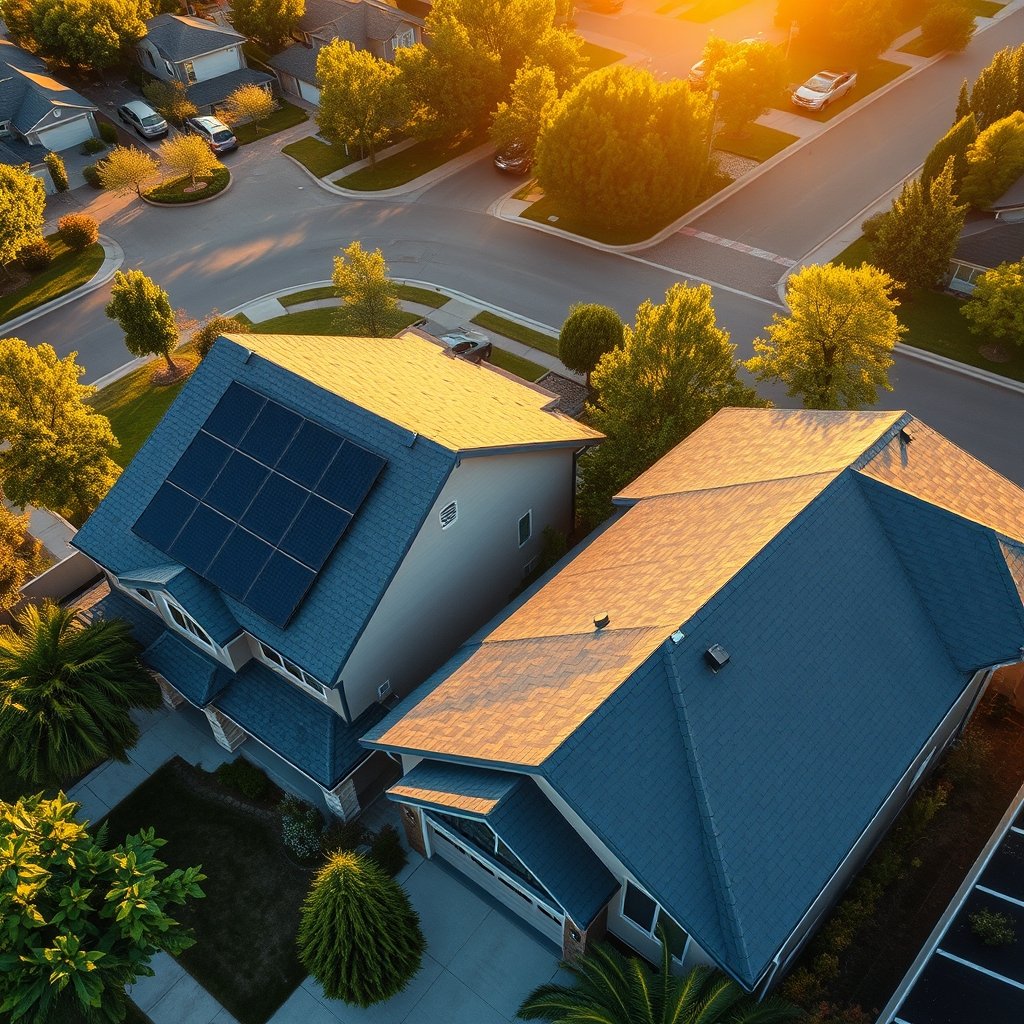
For homeowners, the upshot is simple: if you have limited roof space or high kWh needs, traditional panels still win. Solar shingles, while closing the gap, typically require about 30% more roof area to produce the same power. However, shingles offer radically better curb appeal and almost invisible rooftop installations. See our in-depth solar shingles vs solar panels efficiency comparison for real-world case studies and output data.
Cost Breakdown and Financial Considerations: Tesla Solar Roof Cost 2025 vs Traditional Panels
To decide between solar shingles and panels, start with your home’s roof status, budget, and aesthetic needs—and run the actual numbers before you get a quote.
Here’s what the current numbers look like for most US homes:
- Solar shingles cost: $3.50–$8.00+ per watt installed. For an average 8kW system, you’ll pay $35,000–$75,000+ out the door.
- Traditional solar panels: $2.50–$4.00 per watt. The same 8kW output is typically $20,000–$32,000.
- Tesla solar roof cost 2025: As of now, Tesla does not publish updated 2025 pricing. However, expert analysis and installer reports put total cost in the $45,000–$90,000 range for medium-size homes. This is before incentives, and figures may shift as Tesla’s supply chain and labor markets change.
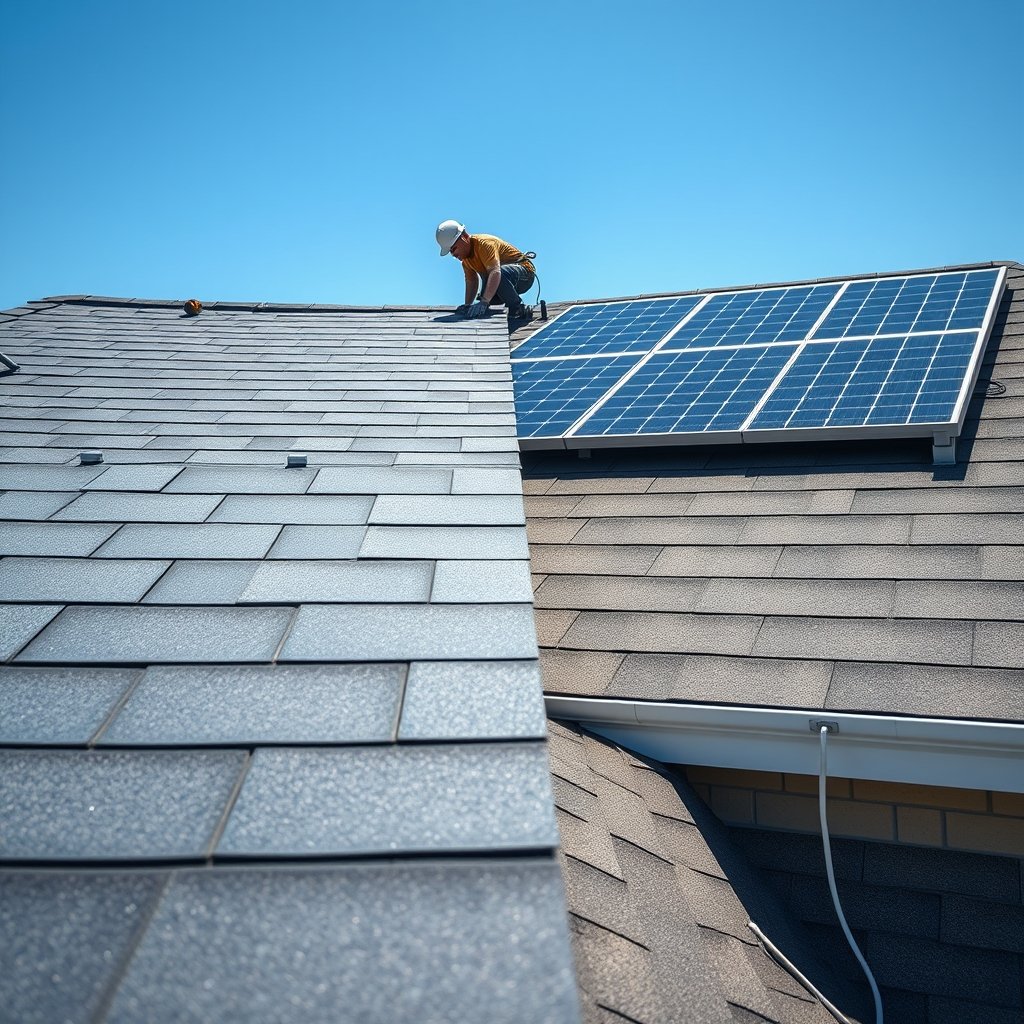
- ROI impact: If you planned to replace your roof anyway, solar shingles can actually be 10-15% more cost effective versus a separate roof + panel install, thanks to project bundling and tax incentives. If your roof is in great shape, buy panels instead.
For more details about solar project ROI and financial levers, review our guide to solar ROI and incentives.
Real-World Usage: Pain Points, Maintenance Challenges & Durability
Choosing a solar system isn’t just about efficiency—it’s about living with it for decades. Here are the biggest differences in daily life and long-term risk:
| Feature | Solar Shingles | Solar Panels |
|---|---|---|
| Lifespan | ~20 years | 25+ years |
| Typical Utility Bill Reduction | 40-70% | Up to 90% |
| Maintenance Complexity | Roof work required for many repairs | Individual panels can be swapped easily |
| Thermal Performance | 92% output on hot days | 88% output on hot days |
| Installation Disruption | 5-7 days, full roof replacement | 1-3 days, roof stays intact |
| Repair Cost/Risk | Expensive, integrated wiring, hard to spot issues | Low—panel-level swap, fast diagnostics |
The most overlooked pitfall? Long-term support. Most solar shingles are relatively new and lack decades of data on warranty claims and degradation rates. If you want absolute peace of mind, racked panels have a longer, clearer track record. See our solar shingles maintenance guide for typical troubleshooting tips and failure points.

Brand Efficiency Showdown: GAF, CertainTeed, Tesla Tiles & Top Panels in 2025
Let’s make it concrete. Here are the current leaders for best solar shingles 2025 and how they stack up versus top-tier panels:
- GAF Timberline Solar ES2: Up to 22.6% efficiency (cell-level), 10-12 watts per ft² real-world, proven heat dissipation (source).
- CertainTeed Solstice Shingle: 19.85% efficiency, 70 watts per shingle, best-in-class durability.
- Tesla Solar Tiles: 8-10% efficiency at tile level, but full-roof coverage possible. Reliable but not market-leading in output.
- Traditional Panels (QCELLS, REC, SunPower): Consistent 20-24%+ efficiency, higher per-panel wattage (400-445W per module), and best-in-field reliability (source).
For up-to-date reviews on GAF solar shingles and how the efficiency wins compare in real installations, check our GAF solar shingles review.
Solar Roof Tiles Cost Per Square Foot: What It Means for Your Investment
Solar roof tiles don’t just cost more per watt—they also require more of your roof’s square footage for the same kick. Here’s what that means for your bottom line:
- Solar shingles deliver about 10-12 watts/ft²; panels give 15-20 watts/ft². So, you need ~30% more roof area to match kWh output (source).
- As per-square-foot installation grows, so do system wiring complexity, inverter costs, and risk of minor issues or leaks with each roof penetration.
- Shingles only make financial sense when paired with a full roof replacement—and when the roof is not shaded or complicated by dormers, vents, or other features that split up coverage.
According to installer-reported data (source), the cost penalty of shingles lessens when you’re already budgeting for a new roof. See our solar roof tiles cost per square foot breakdown for more.
The Overlooked Factors: Missing Insights in Popular Solar Shingles vs Panels Articles
Even top-ranking articles tend to skip some factors that can swing your decision:
- Warranty and Degradation: Shingle system warranties often max out around 20 years. Few brands publish cell degradation rates or back performance guarantees to year 25+, unlike panel leaders such as SunPower. Request sample manufacturer contracts before signing.
- Region and Climate Effects: Most advice assumes a sunny, mild region. But if you’re in a humid, wet, or snowy climate, ask for local performance test data. Shingles may outperform panels in extreme heat, but generally lose out in cloudy or high-humidity zones.
- Inverter/Battery System Complexity: Some shingle models require specific inverter brands or limit your battery storage options. Not all systems play nicely with Tesla Powerwall or advanced monitoring. Push your installer for a schematic of proposed hardware integration, and cross-reference our solar inverter and battery integration guide.
Exploring these gaps will ensure you’re comparing apples-to-apples and not just headline efficiency or cost.
Solar Shingles Pros and Cons: A Full Picture Beyond the Surface
It’s easy to get distracted by stunning photos of seamless solar roofs. But let’s tally up all the big trade-offs that matter for real homeowners deciding on solar shingles vs solar panels.
Pros of Solar Shingles
- Virtually invisible from the street—no racking, no “industrial” look (source).
- Better heat dissipation on hot roofs, with some models outperforming panels in 90°F+ weather (source).
- Integrated install maximizes usable roof space—good for irregular or complicated layouts.
- If your HOA blocks panels, shingles are often approved for their traditional look.
- Combining roof replacement and solar can capture bigger rebates and avoid tear-down/redo costs later.
Cons of Solar Shingles
- Lower output per area: About 30% more roof coverage needed compared to panels.
- Shorter lifespan: 20 years vs 25+ for panels.
- Repair headaches: If one shingle fails, you may need significant roof work. Panels are swapped in minutes.
- Higher upfront costs per watt or kWh.
- Limited market and installer choices: Fewer companies do quality shingle installations—risking delays or warranty issues if your local market shifts.
- Lower utility bill savings: 40-70% with shingles, versus 90% for panels.
- Unadjustable tilt: Many shingle systems are fixed flat to the roof, not optimized for sun angle like racked panels.
Want even more pros and cons? Compare your situation with our solar shingles pros and cons guide.
When Are Solar Shingles the Best Choice? Decision Guidance for 2025 Buyers
How do you know if solar shingles fit your goals and budget? Use these real-world scenarios to decide:
- Choose solar shingles if: Your roof needs replacing anyway, you want maximum curb appeal, or your HOA restricts visible panels. Also, if you live in a very hot climate, shingles can outperform panels (92% output vs 88%). Simultaneous replacement + solar can maximize your federal solar tax credit and minimize household disruption.
- Choose panels if: You want maximum ROI, lowest long-term electric bills, best reliability, or have a nearly-new roof. Also, choose panels if you expect to stay in your home longer than 20 years or want simple module replacements as technology improves.
If you’re ready to compare full proposals, review best solar shingles 2025 and best solar panels for homeowners for vetted brand lists and contractor recommendations.
FAQs: Solar Shingles vs Solar Panels
Which lasts longer: solar shingles or panels?
Traditional solar panels reliably last 25 years or more, while solar shingles typically last around 20 years—sometimes less if exposed to frequent roof work or harsh climates.
Do solar shingles qualify for the same tax credits and rebates as panels?
Yes, solar shingles and roof-integrated solar tiles are eligible for the federal solar tax credit. If you combine a roof replacement with solar installation, the entire cost may qualify in many cases.
Are repairs harder with solar shingles?
Usually, yes. Solar shingles are part of your roof, so fixing or replacing a failed shingle often means roof work. Panels can be swapped individually with little disruption.
How do solar shingle and panel efficiencies compare in real-world weather?
Panels tend to outperform shingles in average or cool climates, but shingles can match or exceed panel output during hot spells, thanks to their superior roof-integrated cooling.
What brands make the best solar shingles for 2025?
GAF and CertainTeed lead the field in efficiency and reliability. Tesla focuses on aesthetics but lags behind on output per tile. See our best solar shingles 2025 guide for latest reviews.