

Home EV charger installation is one of the most impactful (but misunderstood) upgrades for modern homeowners. If you want to charge your electric vehicle as fast and reliably as possible at home, getting a Level 2 charging station installed is virtually essential—yet the costs and requirements can quickly snowball without the right guidance. This 2024/2025 guide breaks down every real cost, technical step, and regulatory twist, so you avoid common headaches and get the best charging setup for your home (whether built in 1972 or 2022).
Key Takeaways
- Level 2 home EV charger installation costs range widely—from $900 for simple new-home installs up to $7,000+ for older homes needing panel upgrades and trenching.
- State-specific permit requirements and electrical inspections are usually mandatory and can add unexpected costs or approval delays.
- Charger choice, available electrical capacity, and installation site (garage, outdoors, etc.) have a major impact on final price and overall charging reliability.
- Understanding the Total Cost to Install a Level 2 Home EV Charger in 2024
- Navigating EV Charger Permit Requirements and Approval Processes by State
- Technical Considerations for Installing a 240V Outlet for Your EV Charger
- Common Homeowner Challenges When Installing EV Chargers in Garages
- Projected Best Level 2 Home EV Chargers for 2025
- How Installation Costs and Requirements Differ Between Older and Newer Homes
- State-Specific Permit Details and Installation Challenges Often Overlooked by Competitors
- Conclusion
- Frequently Asked Questions
Understanding the Total Cost to Install a Level 2 Home EV Charger in 2024
A Level 2 EV charger home cost depends on far more than just the price of the device itself. The true figure comprises several pieces: charger hardware, electrician labor, wiring, permit fees, required inspections, and—if your home’s panel can’t handle the load—a potentially major electrical service upgrade. Costs diverge sharply for owners in newer versus older homes, and for installations requiring extra work (like trenching) or weatherproofing.
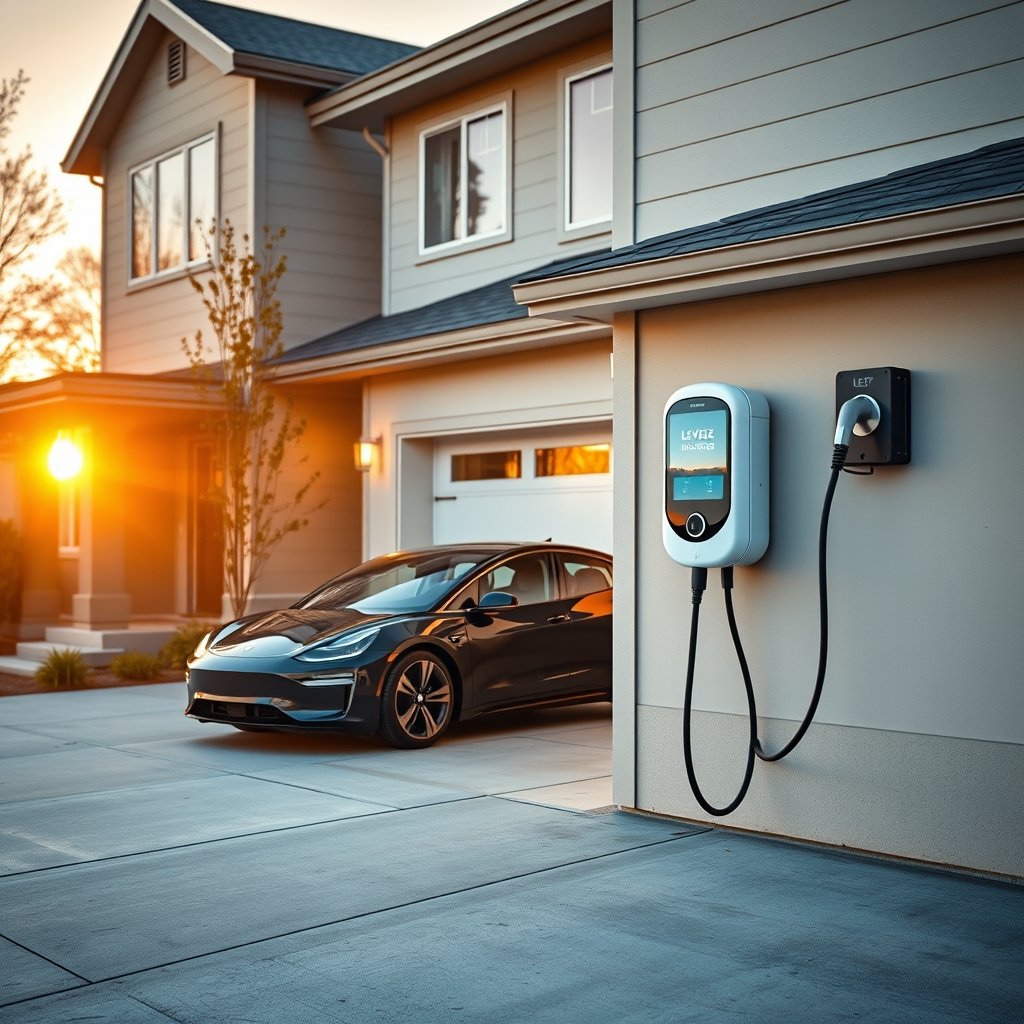
For 2024 and 2025, average all-in installation prices range from $800 to $3,000 for most homes. However, if your property requires a new panel (often the case with homes built before the 1990s), costs can jump to $3,000–$7,000 or even more. Here’s how the numbers usually break down:
- Charger hardware: $400–$1,200
- Electrician labor and wiring: $400–$1,500
- Permits and inspections: $50–$800 (average ~$310)
- Electrical panel upgrade: $500–$5,000+ (if needed)
- Trenching (for detached garage or long runs): $300–$2,000+
- Weatherproofing (outdoor setup): $200–$1,000+
A straightforward install in a newer home—where the panel is close to the garage—typically falls in the $900–$1,800 range. If you need panel upgrades, trenching, or long wiring runs, your cost might exceed $5,000. For an even deeper breakdown, see our Level 2 installation cost guide.
For reference, competitor articles rarely detail each component cost or deal with complex setups—making it easy to underestimate the true bill. You can review cost specifics and comparisons at these reputable sources:
If you want to reduce your installation costs, consider getting quotes from multiple local electricians and ask about any utility discounts or rebates available in your area—a topic covered in our EV rebate resource.
Navigating EV Charger Permit Requirements and Approval Processes by State
EV charger permit requirements are not a formality—they’re mandatory in most U.S. states when adding a new 240v circuit or hardwiring any Level 2 charger. The process, fees, and timeline are determined by your city or county within your state. Even within the same state, requirements can differ substantially.
What does the typical EV charger approval process look like? In California, Texas, Florida, Washington, New York, Colorado, Oregon, Arizona, Nevada, and New Jersey—the states with the highest EV adoption—you’ll likely follow this sequence:
- File an electrical permit application (cost: $50–$800, average ~$310)
- Submit a wiring diagram or contractor’s plan (needed in strict areas like CA, NY, and WA)
- Get plan review and approval, sometimes with pre-work inspection (more common in California and New York)
- Electrician completes installation—must follow city code for wiring, outlets, and breaker rating
- Request a final inspection where an official checks workmanship and electrical safety
Permit cost and processing time typically vary most in large cities or suburban zones. For example, in Los Angeles or Seattle, expect $200–$500 in fees and up to a week for scheduling. In rural Texas or Arizona, you might pay $50–$100 and get same-day approval.
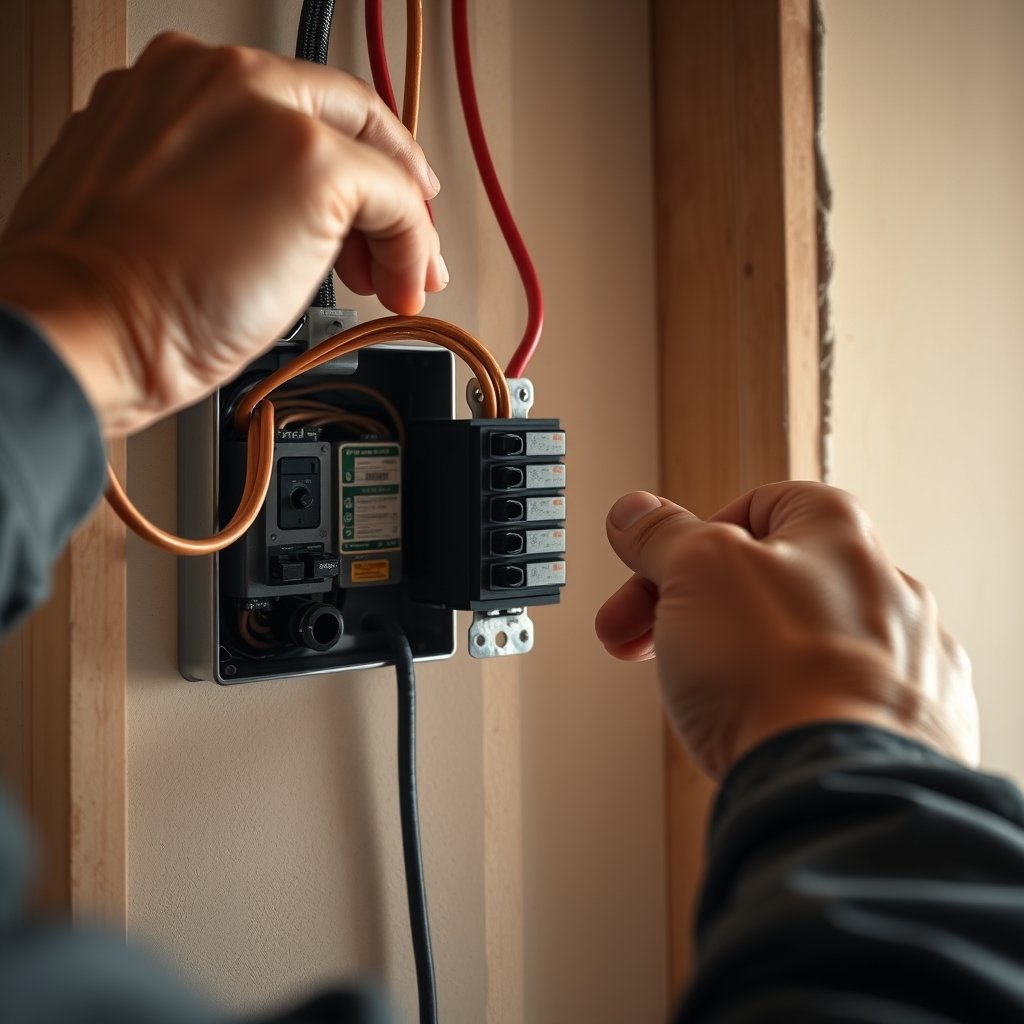
Check your city’s permitting portal, or start with our complete state permit guide for step-by-step directions and paperwork downloads.
Technical Considerations for Installing a 240V Outlet for Your EV Charger
A safe and future-proof install requires a dedicated 240v outlet for EV charger operation—usually on a 40A or 50A breaker (sometimes as low as 30A, sometimes as high as 60A for ultra-fast models). For homeowners in older properties, the challenge is almost always your main panel’s overall available amperage as well as the wiring’s condition and run length.
Start with an electrical load calculation. Add up all major appliances (HVAC, dryer, range, pool pumps) and compare to your main service panel’s amp rating (most older homes have 100A, modern ones 150A or 200A). You need roughly 20–30% buffer after the final install.
- Panel upgrades: If your service panel lacks capacity, an upgrade costs $500–$5,000+. See our panel upgrade checklist for warning signs.
- Wiring and distance: More than 30 feet of conduit or requiring trenching under driveways or yards easily adds $300–$2,000.
- Indoor vs. outdoor: Outdoor EV charger installations cost more—weatherproof enclosures and conduit run $200–$1,000 extra.
- Existing 240V outlets: If present and unused, installation may cost as little as $200–$500 for a basic plug-in Level 2 charger.
Electricians must use code-approved wire gauge for the amperage, and the National Electrical Code (NEC) requires GFCI protection for garage/outdoor chargers. If your house has knob-and-tube or mid-century aluminum wiring, replacement may be needed for safe EV charging.
For a full wiring and breaker selection walkthrough, visit our EV charger wiring guide.
Common Homeowner Challenges When Installing EV Chargers in Garages
While some homeowners get lucky with a straightforward install, most discover hidden issues adding time or money. If your garage or panel is on a different side of the house, you may require attic or crawlspace runs, drywall opening/repairs, or even concrete coring and trenching outdoors.
| Challenge | Impact on Cost | Details / Example |
|---|---|---|
| Panel capacity insufficient | +$500–$5,000 | Panel upgrade or full service replacement required |
| Long wiring/trenching | +$300–$2,000 | Garage not near main panel, or detached structure |
| HOA / Permit delays | 1–4 weeks wait | HOA restrictions or permit backlog can stall projects |
| Drywall & finish work | +$200–$800 | Cutting/patching garage walls for wire routing |
| Outdoor weatherproofing | +$200–$1,000 | Special enclosure, conduit, GFCI, and access panel |
Local hourly electrician rates also vary—rural areas may be 30% cheaper than urban centers. Hidden labor or unexpected code issues (e.g., in homes with knob-and-tube or aluminum wiring) can extend the job by days. If you’re installing in a townhome, be sure to check for HOA EV charging policies before booking an electrician.
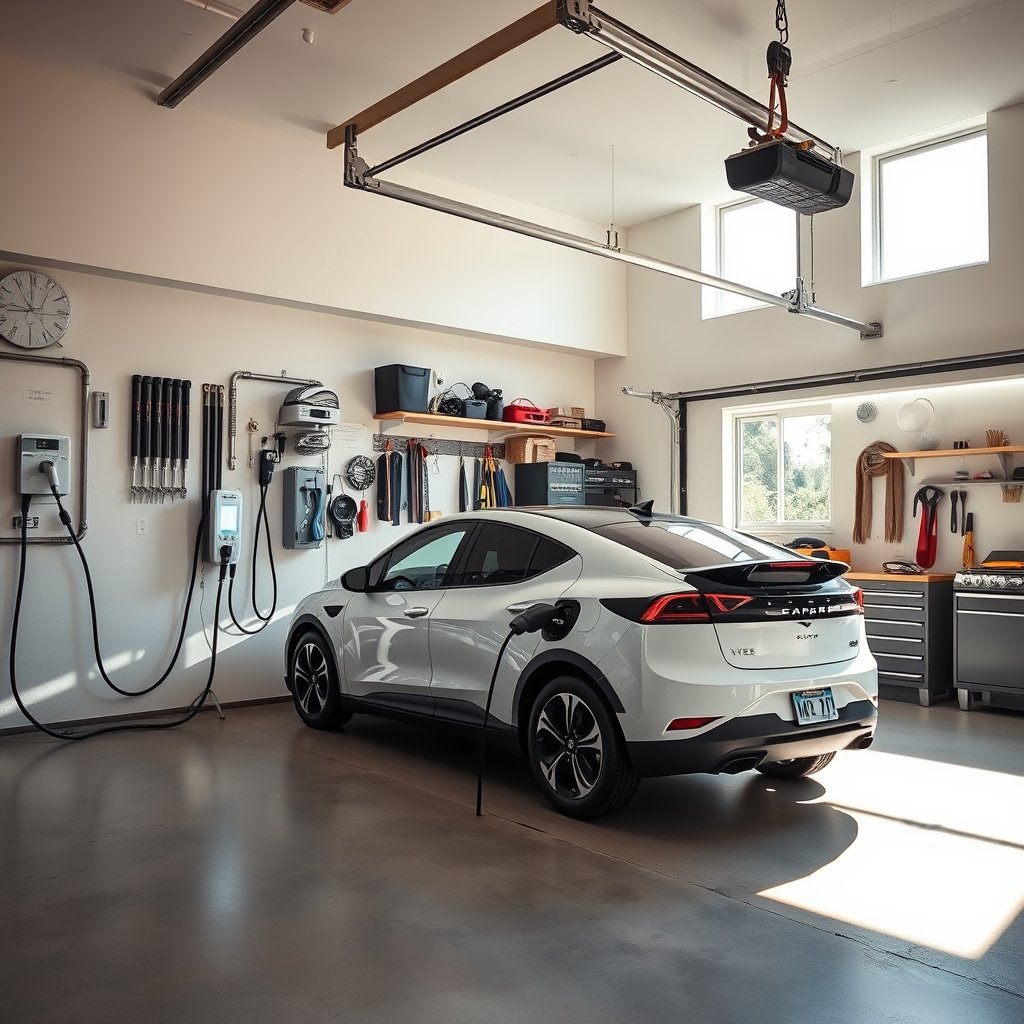
For more detailed troubleshooting, read our EV install problems guide.
Projected Best Level 2 Home EV Chargers for 2025
Selecting the best home EV charger 2025 goes beyond simple brand reputation—it’s about future compatibility, speed, app reliability, and warranty. Here’s what to expect among top picks for the coming year:
- Tesla Wall Connector — $450, 24-foot cable, NACS plug (for Tesla-specific or universal models), 44 miles/hour charge speed, 4-year warranty, robust app controls, widely recommended for both indoor and outdoor use. See J.D. Power’s charging guide.
- Grizzl-E Smart — Universal J1772 connector, up to 40A, rugged build, WiFi-enabled, price around $500–$650.
- Emporia Level 2 — Similar specs with strong home energy monitoring integration; typically $400–$700.
- ChargePoint Home Flex — Flexible amperage (16A–50A), WiFi/app features, and strong homeowner reviews; ~$650–$800.
All of the above support scheduled charging, most major EVs, and can handle both indoor and outdoor environments. Budget models can be under $400, but lack advanced smart features or robust weatherproofing.
For a direct comparison of leading 2025 chargers, check out our in-depth EV charger reviews.
How Installation Costs and Requirements Differ Between Older and Newer Homes
The spread in how much to install EV charger at home truly appears when comparing a new build (with modern 200A service and a garage-ready panel) to a typical house built in the 1960s or ‘70s. In most newer homes, you’ll likely pay just $1,000–$1,800, especially if the panel is located close to the garage. Less wiring, no upgrades, and minimal wall work keep your costs low.
In contrast, older homes frequently need panel upgrades ($500–$5,000), extended wiring or conduit, and almost always run afoul of outdated outlets or undersized service. It’s not uncommon for total installation costs to reach $3,000–$7,000+ in homes with sub-100A main service or with complex garage layouts.
- New homes: Same-wall panel/garage, 200A service, no upgrade = $900–$1,400 typical install
- Older homes: Panel upgrade, attic/crawlspace wiring, possible utility coordination = $3,000–$7,000+
For cost modeling, examples, and panel checklists, consult our older home install guide.
State-Specific Permit Details and Installation Challenges Often Overlooked by Competitors
Most competing guides skip deep dives on state and local rules or don’t address the unique headaches posed by older electrical systems and specific garage setups. Here are frequently overlooked yet critical topics:
- State/city distinctions: For example, San Francisco requires both city and PG&E utility sign-off, while Miami and Dallas only ask for municipal electrical permits.
- Panel and circuit code: Many older homes in the Pacific Northwest or Northeast still use knob-and-tube wiring or have aluminum branch circuits—both usually require upgrades for legal, insurable Level 2 installs.
- Garage-specific hurdles: Drywall penetration requires special firestop caulk and patching, some cities require exterior disconnect switches, and many HOAs ban visible outdoor conduit.
- Permit costs: $50–$800; delays common in metro areas, as are extra plan checks for multi-unit properties.
For checklists tailored to your state, use our permit and inspection resource and consult Qmerit’s installation cost blog.
Conclusion
The true Level 2 EV charger home cost depends on a mix of hardware, panel upgrades, wiring complexity, permit rules, and your home’s age. Home EV charger installation is smoothest (and cheapest) in new homes, but dramatically harder and more expensive in older properties or strict cities. Always research local permit requirements, confirm your panel has capacity, and choose a future-proof charger with strong reviews. Ready to take the next step? Request a no-obligation quote now and get your EV charging up and running—without the surprise headaches.
Frequently Asked Questions
How much does it cost to install a Level 2 EV charger at home?
Typical costs range from $900 for simple installs in newer homes to $3,000–$7,000+ in older homes needing a panel upgrade and extra wiring. Average all-in cost for most homeowners is $1,500–$2,750. [source]
Do I need a permit to install a Level 2 EV charger?
Yes. Almost all U.S. jurisdictions require an electrical permit for new 240V circuits or hardwired installs. This ensures work is code-compliant and safe. Fees range from $50–$800 based on location. Plug-in chargers using an existing 240V outlet may not require a new permit.
Can I use my existing electrical panel or do I need an upgrade?
Maybe. Many modern homes (built after 2000) have enough spare capacity, but older homes often require a $500–$5,000 panel upgrade. Have an electrician do a load calculation before starting your project.
Which Level 2 home EV charger should I buy in 2025?
Top choices are Tesla Wall Connector ($450), Grizzl-E Smart, Emporia Level 2, and ChargePoint Home Flex—each offers strong reliability and smart features. Choose based on car type, required speed, app preference, and planned installation location.
What’s the biggest hidden cost when installing an EV charger at home?
The need for a panel upgrade (if your current panel lacks capacity) is the most common and expensive surprise—budget $500–$5,000 depending on your home’s age and layout.