

Home battery backup system solutions are no longer a luxury—they are fast becoming essential for homeowners who want reliable protection from power outages and rising energy uncertainty. This guide delivers practical answers about market trends, system choices, real costs, and tough trade-offs—so you can make a confident, data-driven decision about the right whole-home battery setup for your needs.
Key Takeaways
- Whole-home battery backup demand is exploding, with a 26.1% CAGR through 2025 driven by policy incentives, solar adoption, and increasing power reliability concerns.
- Tesla Powerwall faces real competition from Generac and LG Chem, but all leading brands use lithium-ion cells with 10+ year lifespans; emerging solid-state options could reshape the market after 2025.
- Installed costs in 2025 will mostly range from $12,000-$20,000, with retrofits and capacity driving price; ROI and reliability depend strongly on capacity, smart tech, and solar or VPP integration.
- Current Market Landscape and Growth Projections for Whole-Home Battery Backup Systems
- Comparing Tesla Powerwall With Leading Alternatives: Performance and Lifespan Insights
- Understanding the True Cost of Home Battery Storage in 2025
- Key Features and Technical Specifications to Prioritize When Buying a Whole Home Battery Backup
- Installation, Maintenance, and Reliability: Real User Concerns and Common Pain Points
- Home Battery Backup Systems Without Solar: Viability, Use Cases, and Limitations
- Overlooked User Concerns and Critical Gaps in Existing Solar Battery Backup Content
- Conclusion
- FAQ
Current Market Landscape and Growth Projections for Whole-Home Battery Backup Systems
The home battery backup market is in a historic growth phase. In 2024, the global industry was valued at $5,891 million, and it’s on track to reach $7,420 million by 2025—a growth rate topping 26%.[Intel Market Research] North America is out in front, especially the U.S., driven by frequent grid disruptions, solar adoption, and influential policies like the Inflation Reduction Act, which helped spark a 47% surge in residential battery applications since 2022.
Consumer sentiment echoes the trend: more than 65% of homeowners now consider home battery backup essential, and adoption is surging where solar is coupled with storage—solar integration alone lifts adoption by 32% year-over-year. Broadly, capacity demand for whole-home coverage is driving sustained double-digit market expansion well into the next decade.[NovaOne Advisor]
Comparing Tesla Powerwall With Leading Alternatives: Performance and Lifespan Insights
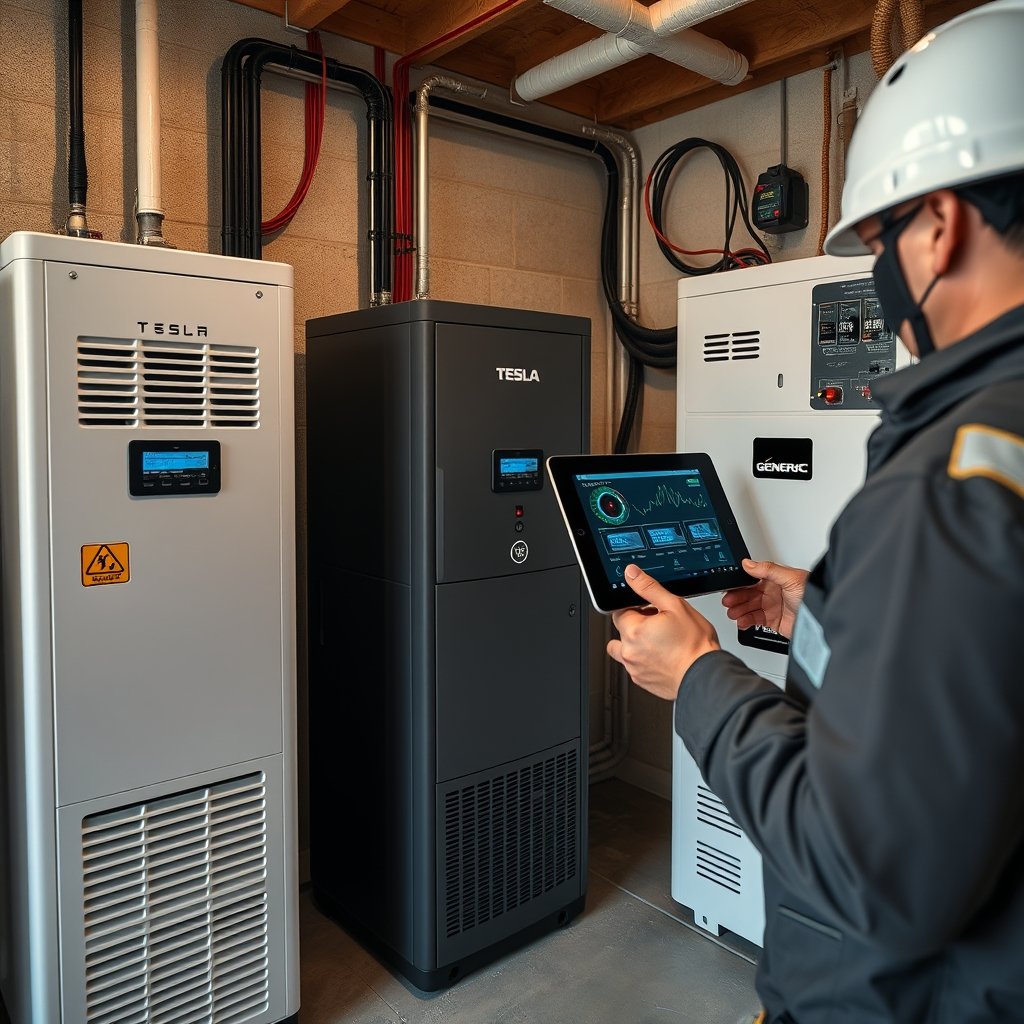
While Tesla Powerwall once defined the market, real competition now comes from Generac and LG Chem. All three flagship brands lean heavily on lithium-ion technology, offering reliable 10+ year lifespans under normal residential use and a far smaller physical footprint—up to 40% less than systems installed just six years ago.[Data Insights Market]
Direct side-by-side user performance data is hard to come by, largely due to the proprietary nature of home installations. What’s clear is that systems with 8kWh or more are dominating growth for whole-home backup and extended outages. Looking to the near future, solid-state batteries show the promise of doubling energy density and dropping system size even further after 2025, possibly making today’s offerings obsolete for new buyers.
If you want to compare brands on specs, efficiency ratings, and integration options, see our guide to Tesla Powerwall installation cost and LG Chem home battery review.
Understanding the True Cost of Home Battery Storage in 2025
Home battery storage cost in 2025 still involves a significant outlay. Average complete systems, installed, typically run $12,000-$20,000. If you’re retrofitting a battery backup into an older home, expect installation complexity to raise that cost by another 20-30%, depending on rewiring and panel upgrade needs.[Intel Market Research]
Looking ahead, battery prices should decline further. Solid-state cells coming to market after 2025 are projected to cut average system costs by 35% or more. However, note that smaller-capacity systems may drop in price slower, since fixed labor and installation charges make up a bigger proportion of their total cost.
For a breakdown of costs across different capacity sizes and setups, check our updated solar battery storage cost explainer.
Key Features and Technical Specifications to Prioritize When Buying a Whole Home Battery Backup
Not all batteries are created equal. For genuine whole-home backup you should look for:
- Capacity: 8kWh or larger for extended outages and full-home loads.
- Battery chemistry: Lithium-ion remains the best mix of lifespan, reliability, and energy density in 2025.
- Smart home integration: Choose models that synchronize with your home automation platform and offer app-based monitoring and remote control.
- BMS (Battery Management System): 2024 models with enhanced BMS outlast older designs and protect cells from deep discharge and temperature extremes.
- VPP (Virtual Power Plant) compatibility: Can boost long-term ROI by 30-40% by allowing you to sell surplus storage back to the grid in select markets.
More details and BMS technical tips are available in our battery management system guide and our installers directory.
Installation, Maintenance, and Reliability: Real User Concerns and Common Pain Points
The biggest user pain points in 2025 still boil down to two things: initial cost and uncertainty about lifespan. While a few households have reported battery module failures, most issues relate to sticker shock—$12,000-$20,000 upfront with costs even higher for complicated retrofits.[Data Insights Market]
Actual system maintenance is minimal for lithium-ion models, and breakdowns during outages are rare, but concerns about battery recycling and long-term end-of-life costs are growing. For the vast majority of homeowners, reliability in real grid-outage events consistently meets expectations, provided the system is sized appropriately and installed by certified installers. Unsure about installation options? Read our solar battery backup installation guide.
Home Battery Backup Systems Without Solar: Viability, Use Cases, and Limitations
Can you install a home battery backup without solar? Absolutely—and more than 65% of homeowners cite backup as essential even in grid-tied and non-solar homes. These systems provide peace of mind in outage-prone or remote areas (think off-grid cabins or rural homes), and they’re vital where grid reliability is questionable.
The downside? Without solar generation or VPP participation, standalone backup has a lower ROI and isn’t eligible for several solar-only rebates or incentives. And, unlike solar-plus-storage homes, battery-only installs haven’t seen the 32% year-over-year adoption surge common with integrated systems.
Comparing standalone to solar-integrated home battery backup yields a simple rule: the more your system can interact with on-site solar and participate in grid services, the faster it pays for itself and the more resilient your home becomes.
For more use case examples and region-specific limitations, check out our post on best home battery backup for power outages.
Overlooked User Concerns and Critical Gaps in Existing Solar Battery Backup Content
Most top-ranked solar battery backup system guides miss three areas buyers care about most:
- Real comparative data: Side-by-side performance, cycle life, and downtime statistics between Tesla Powerwall, Generac, LG Chem, and other top brands during real outages are not published by manufacturers.
- Deeper user complaints: Beyond high upfront cost, installation headaches (such as panel upgrades, local permitting, and code restrictions), as well as recycling and repair issues, are rarely detailed in available reviews.
- Forward-looking cost breakdowns: In-depth 2025 projections including how size (e.g., below vs. above 8kWh) and solar vs. standalone impact both up-front and ongoing system expenses are almost never explained in full.
| Feature / Metric | Tesla Powerwall | Generac PWRcell | LG Chem RESU |
|---|---|---|---|
| Battery Chemistry | Lithium-Ion | Lithium-Ion | Lithium-Ion |
| Capacity Range (kWh) | 13.5 | 9–18 | 9.8 |
| Expected Lifespan | 10+ years | 10+ years | 10+ years |
| Smart Home Integration | Yes | Yes | Partial |
| VPP Eligibility | Yes | Yes | Varies |
| Typical Installed Cost (2025) | $12,000–$16,000 | $14,000–$20,000 | $13,000–$17,000 |
| Solid-State Option | Not Yet | Not Yet | Not Yet |
For a practical checklist and deeper dive into these issues, see our resource on solar battery backup system FAQ.

Conclusion
Investing in a home battery backup system in 2025 is one of the most effective steps to secure your home from blackouts and energy price spikes. While costs remain high, trends indicate rapid improvement in value, performance, and feature set over the next two years. Focus on proven lithium-ion systems, size for whole-home coverage, and seek qualified installation—especially if considering solar or virtual power plant upgrades later.
If you’re ready to take the next step, get a quote from a whole house battery backup installer directory for vetted local providers. Protect your home’s power and peace of mind for the decade ahead.
FAQ
How long do whole-home battery backup systems actually last?
Most lithium-ion systems from major brands like Tesla, Generac, and LG Chem last over 10 years, provided normal usage and professional installation. Future solid-state batteries could double available cycle life after 2025.
Can I get a home battery backup without installing solar panels?
Yes. Standalone battery backups are common in outage-prone areas, but ROI and incentives are usually higher when combined with solar generation and grid programs.
What is the real cost of a home battery backup system in 2025?
Installed costs average between $12,000-$20,000, with complexity, home size, and retrofits adding 20-30%. Costs are expected to drop an additional 35% after 2025 as solid-state batteries become more available.
Is it worth joining a virtual power plant (VPP) with home battery backup?
If available in your area, VPP participation can improve ROI by 30-40% and may provide bonus payments for sharing extra stored energy during grid events.
What are the main downsides to home battery backup systems?
Upfront costs are high and some users express concern about end-of-life recycling. Reliability during outages is strong, but long-term manufacturer support is crucial as the sector rapidly evolves.