

Arch doorway DIY is the fastest way to upgrade plain doorways into architectural features, adding style and value to your home—even if you only have moderate carpentry skills. This practical guide covers every step, from cost comparisons and kit selection to the reality of finishing curves in drywall.
Key Takeaways
- Arch doorway DIY with prefabricated kits saves substantial labor costs and creates clean, professional results without complex drywall bending.
- Careful planning, proper tools, and structural awareness are critical for a safe, durable, and attractive round doorway conversion.
- Avoid most common DIY pitfalls—like imperfect curves and rough seams—by investing in quality kits and strategic finishing techniques.
- Understanding Arch Doorway DIY Projects: Scope and Benefits
- Step-by-Step Guide: Building an Arch Doorway in Drywall
- Advanced Analysis & Common Pitfalls
- Conclusion
- FAQ
Understanding Arch Doorway DIY Projects: Scope and Benefits
An arch doorway DIY project transforms a standard rectangular opening into a charming round doorway conversion, often using a DIY arched doorway kit for precision and speed. Homeowners choose this update to create visual interest, boost home value, and bring classic architecture into otherwise boring rooms. Prefabricated arch kits create a perfect arch and eliminate the need for difficult manual drywall work, resulting in consistently smooth curves for both beginners and seasoned DIYers. According to Erin Zubot Design, prefab kits offer perfect curves without manual bending, making them a top choice for safe and precise round doorway conversions.
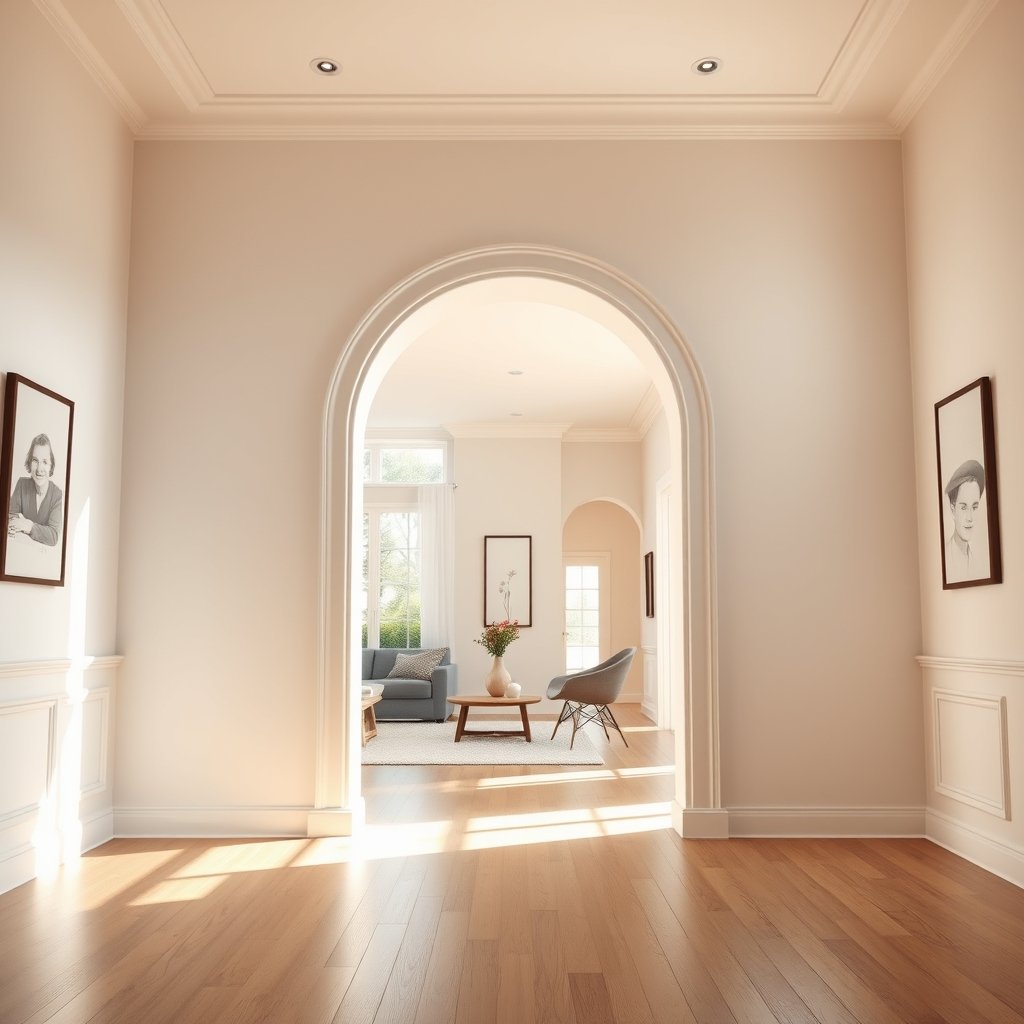
Archway upgrades are not only about looks—replacing square corners with gentle curves can increase perceived room size and elevate first impressions. A prefab arch kit designed for either 2×4 or 2×6 framing streamlines installation, letting you avoid most complex drywall scoring and offering a more approachable project for intermediate DIYers.
Step-by-Step Guide: Building an Arch Doorway in Drywall
A successful arch doorway installation requires careful preparation, choosing the right materials, and precise execution. Here’s a practical, detailed workflow for homeowners tackling round doorway conversions with a DIY arched doorway kit.
- Measure the Doorway and Check Structure
Determine if your wall is load-bearing. Use a stud finder and check above the opening for existing headers. For non-load-bearing cases, you can proceed to remove casing and trim. For load-bearing—stop and hire a structural professional before altering framing. - Prepare Framing for Arch Kit
Remove enough drywall to expose wall studs at least six inches above the current opening. For standard interior walls, most arch kits fit 2×4 or 2×6 framing. Reinforce the arch area with L-shaped supports where the radius will sit. This gives the kit a stable platform and reduces flexing. - Install the Prefab Arch Kit
Fit your DIY arched doorway kit of the correct thickness and radius to the framing, centering it in the opening. Hold it in place and secure with construction adhesive and drywall screws, following the manufacturer’s spacing guidelines. Foam kits are lightweight and readily shape to the studs. Kits should sit flush and tight against new framing—check for gaps to avoid future cracks. - Add Drywall and Flexible Corner Bead
Measure, cut, and install drywall pieces to fill remaining gaps above and around the arch. Attach with drywall screws. Carefully install a flexible plastic corner bead along every curved edge—secure with staples or construction adhesive. This ensures clean, crack-resistant seams at every transition point.
- Measure the Doorway and Check Structure
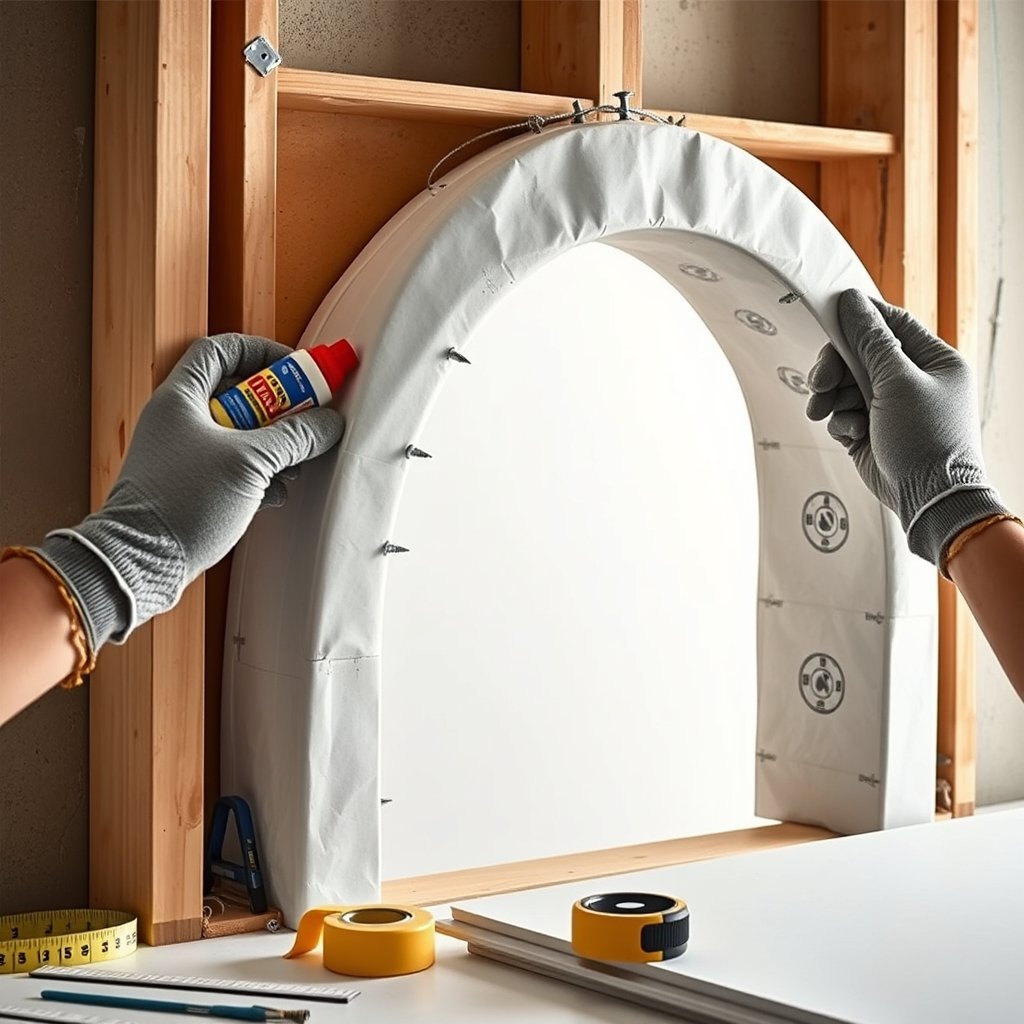
- Taping and Mudding the Curve
Apply joint compound (mud) to all seams and the entire curved bead. Use a Taping and Mudding knife to smooth along arch and transitions. Expect at least two to three coats, sanding lightly between each to create a consistent, flawless curve. This step often makes the difference between amateur and pro results—take your time and avoid over-building, which can exaggerate bumps. - Prime, Paint, and Add Arch Doorway Trim
Prime the finished surface, then sand and apply a quality paint. Install arch doorway trim kit pieces for detail if desired. Some artists use flexible casing for rounded top trim and regular stock for legs. If you lack confidence in finishing, hire a professional drywaller for taping and mudding—the final look is worth it.
Optional: Install a fiberglass arched door for further upgrade, which can offer durability and cost savings over custom wood options. For more on affordable materials, visit Frame-Well’s Guide to Fiberglass Arched Doors.
Advanced Analysis & Common Pitfalls
Many arch doorway DIY projects fall short due to lack of planning, poor kit selection, or improper finishing techniques. Here are proven issues and how to avoid them—plus, a transparent cost comparison.
| Conversion Method | Typical Cost (2024) | Skill Required | Common Pitfalls |
|---|---|---|---|
| Professional Installation | $2,000+ labor alone [source] | None (outsourced) | None, but highest cost |
| DIY Framing + Manual Arch | $350-600 per opening | High carpentry + drywall |
|
| DIY Arched Doorway Kit | $75-200 (kit) + supplies | Moderate |
|
Common Challenges—And Solutions:
- Finishing Curves: Scoring and bending drywall by hand rarely matches factory-made curves and makes taping complex. Prefab kits and flexible plastic corner bead help produce smooth results.
- Curve Consistency: Using string and pencil for arches can result in lopsided or “wavy” shapes. Kits guarantee geometric precision.
- Structural Weakness: Failure to add L-shaped framing for support under the arch can lead to sagging or cracking long-term.
- Drywall Damage: Over-torquing screws or missing adhesive application can crush foam, cause seams to split, or lead to future separation.
- Underestimating Finishing Effort: Mudding and taping on curved edges is significantly more difficult than straight lines. Most homeowners benefit from hiring a drywall pro for the final stages. (If you have doubts, read more about Drywall Finishing Tips.)
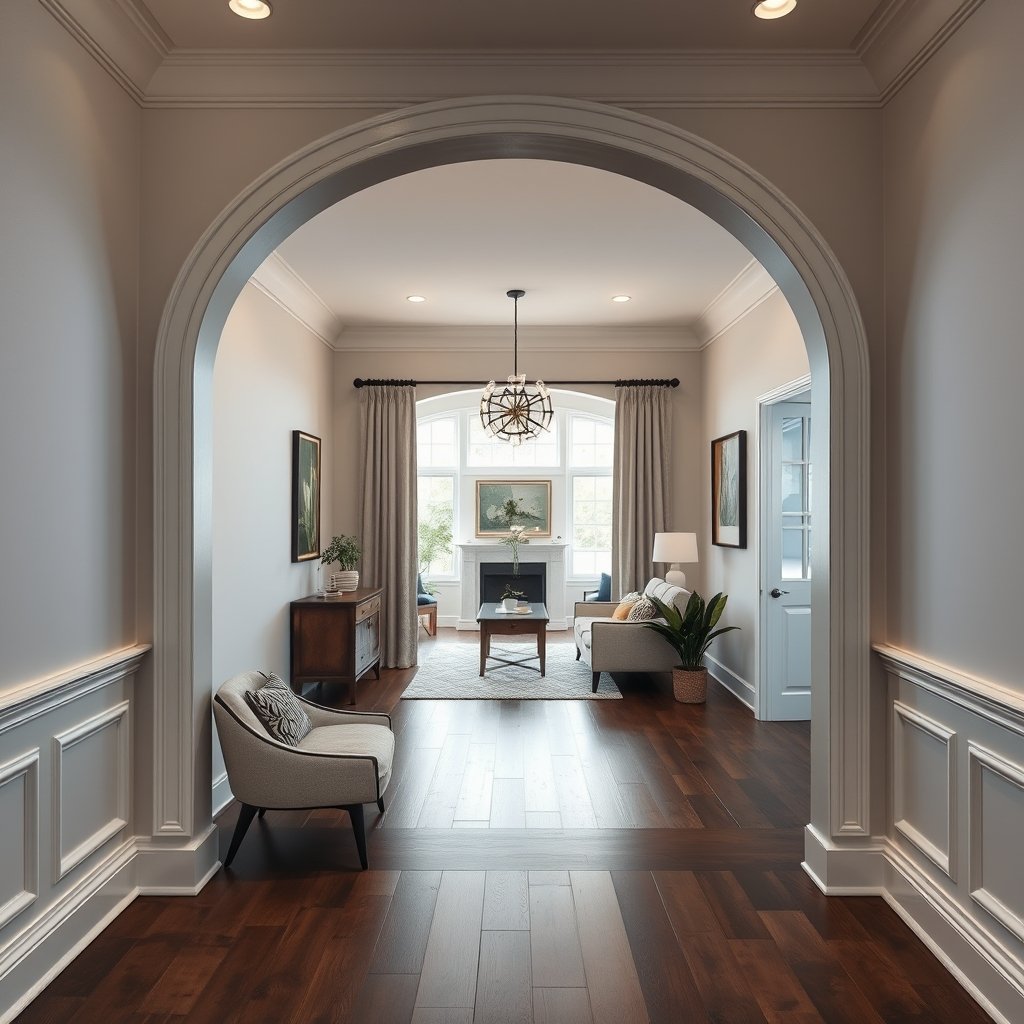
Ensure you select DIY arched doorway kits designed for your stud size, check for paper-faced foam for easy mud integration, and never skip structural assessment. Need help picking a kit? See our Best DIY Arched Doorway Kits roundup, or compare different arch styles before starting.
For more actionable home improvement tasks, check out our comprehensive Interior Doorway Upgrades Guide that dives into alternatives and creative ideas.
Conclusion
With the right prep, tools, and a quality prefab kit, you can complete an arch doorway DIY project in a single weekend—often for a fraction of professional installation costs. Always prioritize structure and finishing, and never hesitate to call a drywall pro for those critical final details. Ready to begin? Gather your materials, download our printable checklist, and start your transformation today.
FAQ
How much does it cost to convert a standard doorway to an arch with a DIY kit?
Expect to spend $75–$200 on a DIY arched doorway kit, plus about $50–$100 for drywall, trim, and finishing materials. Professional installation can start at $2,000 or more for labor alone.
Can I use a DIY arch doorway kit on a load-bearing wall?
It’s possible, but extra caution is required. Always consult a structural professional before modifying a load-bearing wall, as added headers or reinforcement may be necessary for safety and compliance.
Is it difficult to finish drywall on a curved arch?
Curved drywall finishing is more challenging than straight seams. Using a prefab arch kit and flexible corner bead makes the process much easier, but if you’re not experienced, hiring a pro for final taping and mudding yields the smoothest results.
What tools and materials do I need for a DIY archway?
You’ll need a prefab foam arch kit, drywall screws, construction adhesive, a flexible plastic corner bead, joint compound, framing supports, a taping knife, and sanding tools. Check your kit’s instructions for specifics.
Are prefab arch kits durable?
Yes. Prefab arch kits made from dense paper-faced foam are intended to be sandwiched between framing and drywall, resulting in durable, stable curves when properly reinforced and finished.