

Amazon smart thermostat is quickly becoming the go-to choice for tech-curious homeowners and renters in 2024 who want a reliable, budget-friendly way to upgrade their climate control—especially if you already use Alexa or want a DIY install without the headaches and high costs of other smart home thermostats like Google Nest or Ecobee.
Key Takeaways
- Amazon Smart Thermostat stands out in 2024 for budget pricing, real-world reliability, and seamless Alexa integration—if you have a standard HVAC and use Alexa, it’s tough to beat for value.
- DIY installation is straightforward (under 30 minutes if your system has a C-wire), but homes lacking a C-wire will need a power adapter and may face extra hurdles.
- Energy Star certification means annual energy savings and possible local rebates, but more advanced features or non-Alexa integrations (HomeKit, Google Home) are noticeably absent.
- Amazon Smart Thermostat at a Glance: 2024’s Value Leader in Smart Home Thermostats
- Real User Satisfaction: What Verified Owners Love—and What They Don’t
- Installation—How Simple Is It Really? What to Expect for Your Home
- Compatibility with HVAC Systems: Strengths & Gaps Compared to Nest and Ecobee
- Alexa Integration—What You Get (and Don’t Get) That Competitors Miss
- How Much Does It Really Cost? Upfront Price, Install Fees, and Energy Rebates
- Overlooked Technical Details: Deeper Energy Insights and Privacy Considerations
- Is Amazon Smart Thermostat Right for You? Final Decision Guide
- FAQ: Your Amazon Smart Thermostat Questions Answered
Amazon Smart Thermostat at a Glance: 2024’s Value Leader in Smart Home Thermostats
The Amazon smart thermostat has carved out a budget-friendly leadership position in the smart home thermostat market for 2024. Users—from renters wanting simple upgrades to owners with full Alexa households—praise its strong reliability, minimal downtime, and consistently high energy savings compared to pricier options like Google Nest and Ecobee.

Recent Best Buy customer reviews praise the thermostat’s multi-year reliability, including accounts of four units running seamlessly across two homes, and TechGearLab highlights its top-tier value, robust scheduling, and strong remote accessibility. Energy Star certification means steady year-round savings—all for under $100, making it hard to ignore for value-focused smart home upgrades.
While it doesn’t have every advanced feature, its minimalist approach and Alexa-first design bring top marks in hands-on ease, especially for Alexa users looking to maximize return on investment. For readers looking to compare other Alexa devices and routines, check out our Alexa smart home tips or for a broader comparison, dive into our best smart home thermostats of 2024 guide.
Real User Satisfaction: What Verified Owners Love—and What They Don’t
2024 user feedback for the Amazon smart thermostat shows high marks where it counts: predictable reliability, simple controls, and value. Users frequently cite:
- Reliability: Units run for years with no failures, even with multiple thermostats per home (see verified reviews).
- Affordability: Hardware costs much less than comparable models, with comparable energy savings. DIY install saves even more.
- Alexa Integration: Simple voice or app-based scheduling and control, with added perks for those already in the Alexa ecosystem. Filter reminders and carbon-tracking data are exclusive pluses.
Where does it fall short? Reported pain points cluster around:
- Interface lag: Both the thermostat and app can feel slow to load compared to the snappier Google Nest or Ecobee platforms.
- Basic UI: Display and app navigation are less intuitive, especially for first-time smart thermostat users or those accustomed to more polished interfaces.
- C-wire dependency: Many negative experiences center on surprise installation challenges—specifically, systems without a C-wire requiring a power adapter for proper function.
- No Google Home/HomeKit: Full feature set requires Alexa; this is not the option for those tied into Apple or Google Home ecosystems.
In side-by-side comparisons, users report Amazon’s model is more “set it and forget it,” while Ecobee vs Nest offers higher customization and speed, but at a steeper price—making the Amazon smart thermostat the clear value leader for Alexa loyalists, as noted by TechGearLab and How-To Geek.
Installation—How Simple Is It Really? What to Expect for Your Home
The Amazon smart thermostat is built for easy, guided DIY installation—even if you’re a first-timer. Most users report finishing in under 30 minutes on a typical C-wire-equipped system using just a screwdriver, with the Alexa app installation guide providing step-by-step visuals and safety tips.
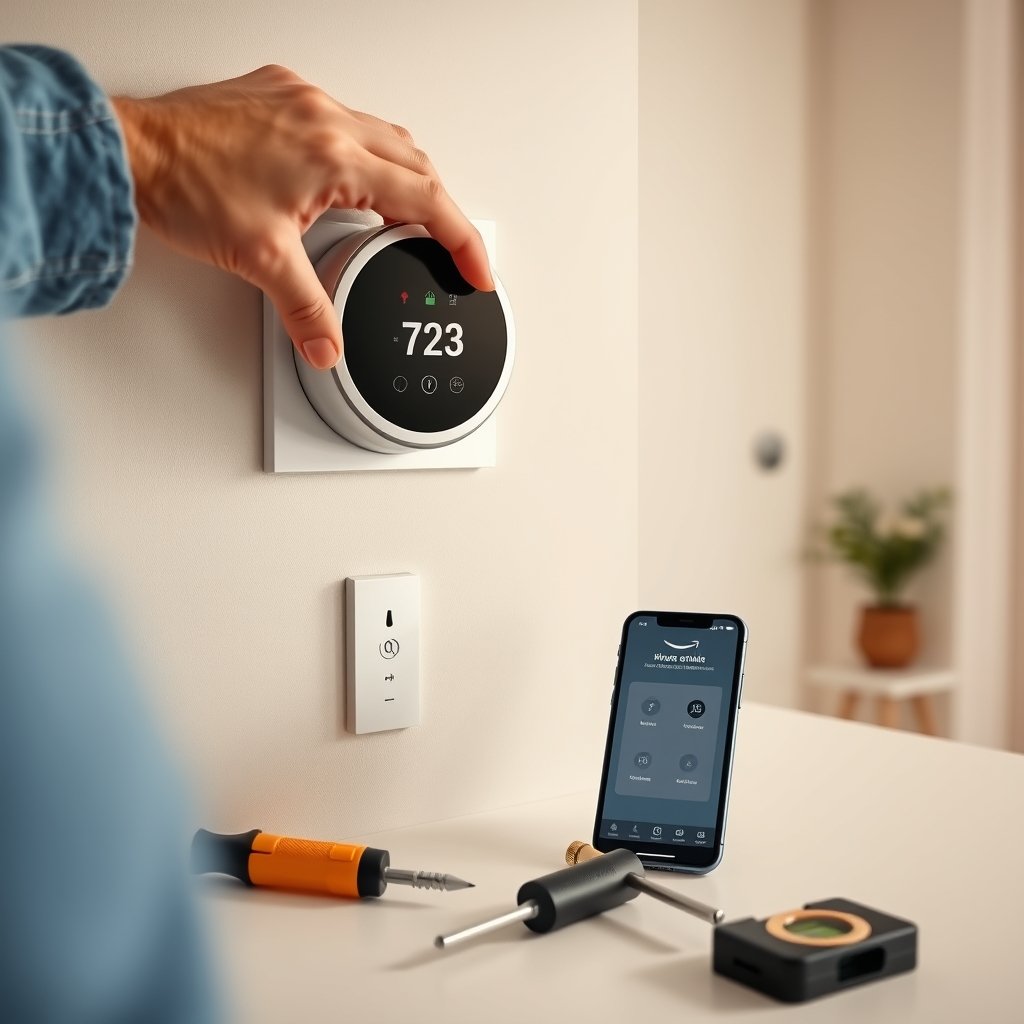
Common install steps:
- Turn off power at your HVAC breaker—for safety and accurate wiring.
- Remove existing thermostat and label each wire (the Alexa app helps match old to new terminals).
- Connect the Amazon smart thermostat’s base plate and wire your system using the clearly labeled terminals. If missing a C-wire, the app will walk you through identifying compatibility or suggest a C-wire adapter.
- Power your HVAC system back on, pair the thermostat with your Alexa app, and walk through the setup wizard for Wi-Fi, scheduling, and integration options.
Most issues arise due to:
- Homes lacking a C-wire—requiring extra time, a C-wire adapter, or professional help.
- Wi-Fi connectivity hiccups (double-check your 2.4 GHz network and password).
- Pairing steps stumping non-Alexa users (you must use Amazon’s Alexa app, no alternatives).
On rare occasions, tricky legacy wiring or closed HVAC panels may require a consult with a pro. But for the majority with standard equipment, this is absolutely DIY territory—unlike some competitors that require pro-level rewiring.
If you’re curious about tackling other DIY smart home upgrades, visit our DIY smart home projects hub.
Compatibility with HVAC Systems: Strengths & Gaps Compared to Nest and Ecobee
One of the top considerations before you buy any smart home thermostat is whether your HVAC system is supported out of the box. The Amazon smart thermostat is built for maximum coverage of standard residential systems—forced air, gas, oil, or electric—with single-stage control, but you’ll need a C-wire (or to add an adapter) for consistent power.
Where Amazon excels:
- Most single-zone, central HVAC systems with a C-wire will work perfectly.
- Clear C-wire or adapter guidance within the app; proactive alerts during installation for common incompatibilities.
Where it falls short vs. competitors:
- No explicit support for multi-stage HVAC, dual-fuel systems, or heat pumps—Google Nest and Ecobee both specify wider compatibility and can often run on fewer wires due to power-stealing technology.
- Does not work with line voltage (baseboard heaters) or proprietary home automation control panels.
If you own or plan to upgrade to a more complex HVAC system, or don’t have a C-wire, you may be better suited to exploring the best smart thermostat for multi-stage systems or reviewing our Ecobee vs Nest comparison for broader compatibility matrices.
Alexa Integration—What You Get (and Don’t Get) That Competitors Miss
The Amazon smart thermostat is built first and foremost for Alexa fans. It delivers deeper Alexa ecosystem features than most competitors:
- Native voice control: Use any Alexa-enabled device (Echo Dot, Show, Studio, or the Alexa app) to set or query temperature, state, and schedules.
- Alexa Hunches: Let Alexa automatically adjust climate settings based on occupancy, location, and learned patterns—without constant manual input.
- Exclusive carbon tracking: See your carbon impact and eco-friendly habits directly in the Alexa app (no extra skills required).
- Ring and Alexa synergy: If you have Ring cameras or security devices, you’ll enjoy unified scene and routine management through one app.
- Filter reminders and reordering: Get notified when filters need changing—and optionally reorder directly via Amazon.
But the ecosystem is closed:
- There’s no Google Home or Apple HomeKit compatibility—period. If you want to control your climate using Siri or Google Assistant, you’ll need to look elsewhere.
- You must manage all automations and insights from within the Alexa app; there’s no standalone thermostat interface or non-Amazon alternatives.
For households centered on Alexa and Ring, these features are a major plus. If you’re planning a broader, cross-platform smart home, the closed ecosystem could be a dealbreaker—consider this before hitting “buy.”
How Much Does It Really Cost? Upfront Price, Install Fees, and Energy Rebates
The Amazon smart thermostat has the lowest barrier to entry among the majors. In 2024:
- Hardware cost: Typically just under $100 via Amazon, Best Buy, or Home Depot.
- DIY install: Free if you do it yourself (and most do). If you hire a professional—such as for C-wire adapter installs or complex legacy systems—count on $100-200 for labor. Still, the combo is usually less than a Google Nest or Ecobee even at DIY price, and much less than pro-installed competitors.
- Utility rebates: Because it’s Energy Star certified, you may qualify for local utility rebates or incentives—check your city’s rebate finder or this resource to see if you can get cash back. Average owners save about $50/year according to tech reviews.
Visit our smart thermostat rebates guide for current offers in your area.
Keep in mind: those savings multiply if you operate multiple thermostats or split costs with roommates in a rental. Unlike some costly “smart” upgrades, this is a rare case where you can expect the investment to actually pay itself off in a year or two via lower bills and rebates.
Overlooked Technical Details: Deeper Energy Insights and Privacy Considerations
The Amazon smart thermostat offers several in-depth technical features that are often missed in basic reviews:
- Carbon impact analytics: The Alexa app tracks your estimated energy-related carbon footprint, highlighting when your settings are considered eco-friendly (heating below 68°F or cooling above 75°F). This is visible as the “Eco Icon” and makes energy optimization easy at a glance.
- Automated savings via Alexa Hunches: Advanced scheduling and “hunches” let Alexa preemptively adjust your system based on occupancy, saving energy even if you forget to “set away.” Users often see $50/year or more in savings with minimal manual input (How-To Geek 2024).
- Privacy and ecosystem lock-in: All insights, routines, and settings are processed in the Amazon cloud. This means limited third-party data leakage outside Amazon’s sphere, but also total dependency on Amazon’s infrastructure—no exporting your settings or routines to Google Home, Apple devices, or IFTTT. Be prepared for the occasional up-sell notification (like filter reorder suggestions) but also peace of mind that your thermostat data isn’t constantly brokered to third-party advertisers like on many cross-platform systems.
For renters or new smart home upgraders, the trade-off is clear: you get extra privacy from cross-company sharing, but at the cost of future flexibility if you ever want to move to another ecosystem.
Is Amazon Smart Thermostat Right for You? Final Decision Guide
The Amazon smart thermostat is ideal for:
- Alexa-first homes already invested in Amazon and Ring smart devices
- DIYers with standard, C-wire-equipped single-stage HVAC setups
- Renters or homeowners needing predictable, budget-friendly energy savings and reliability
But you should consider other options if:
- Your home lacks a C-wire and you don’t want to install an adapter
- You require multi-stage or heat pump compatibility
- You prefer the slick UI and advanced features offered by Nest or Ecobee—or you’re deeply invested in Google Home or Apple HomeKit
Based on the research, verified reviews, and real-world cost of ownership, the Amazon smart thermostat delivers high satisfaction and best-in-class value for budget-conscious Alexa-powered homes with a basic system in 2024. If you want hassle-free installation, energy savings that pay off, and tight Alexa integration, this is a smart upgrade to make. Shop the Amazon smart thermostat now or compare it with our smart thermostat buying guide before you decide.
FAQ: Your Amazon Smart Thermostat Questions Answered
Will the Amazon smart thermostat work if I don’t have a C-wire?
No—it requires a C-wire for consistent power. If your system lacks one, you’ll need to install a C-wire adapter at your furnace or hire a pro for wiring support. The Alexa app will help determine compatibility during setup.
Can the Amazon smart thermostat control multi-stage or heat pump systems?
No, it is only rated for standard single-stage systems. For multi-stage or heat pump systems, consider models from Ecobee, Nest, or Honeywell that specifically list this support.
Is it possible to use Amazon smart thermostat with Google Home or Apple HomeKit?
No—this device is strictly for Alexa ecosystems. There is no Google Home, Siri, or HomeKit support. For cross-platform compatibility, check out Nest, Ecobee, or Honeywell Home thermostats.
How much can I expect to save in energy costs per year?
Most homes see average savings of about $50 per year with Energy Star scheduling and Alexa Hunches enabled, according to tech reviews. Real savings depend on your home, usage patterns, and climate zone.
Does the Amazon smart thermostat store or share my usage data with third parties?
Data is processed and stored within the Amazon cloud—this limits sharing with third parties, but you are entirely dependent on Amazon’s ecosystem for all smart features, insights, and automations.