

Energy efficient windows tax credit 2025 can significantly reduce the out-of-pocket costs for homeowners planning replacement windows, but successfully claiming these savings takes more than just buying new glass. With stricter requirements, tight annual caps, and a looming expiration date, it’s critical to act smart—here’s how.
Key Takeaways
- Qualifying for the 2025 Energy Efficient Windows Tax Credit gets you 30% back on eligible window/skylight costs, capped at $600 per year.
- Only ENERGY STAR Most Efficient certified windows qualify—standard ENERGY STAR isn’t enough for 2025.
- To avoid rejection, precise documentation and careful reading of all rebate and stacking rules are non-negotiable.
- 2025 Energy Efficient Windows Tax Credit—How Much Can You Actually Save?
- Who Qualifies? 2025 Eligibility Requirements Explained
- What Are the Best Energy Efficient Windows for 2025?
- How to Claim the Window Tax Credit in 2025: A Step-by-Step Walkthrough
- Can You Stack the 2025 Federal Tax Credit with State or Local Rebates?
- Avoid These Common Window Tax Credit Mistakes (and Denials)
- What Happens After 2025? Expiration Dates & Future Outlook
- Real-Life Energy Savings—Are They Worth It?
- Frequently Asked Questions (2025 Window Tax Credit Edition)
2025 Energy Efficient Windows Tax Credit—How Much Can You Actually Save?
The 2025 window replacement tax credit is direct and generous if you hit every box. Under the federal Energy Efficient Home Improvement Credit (Section 25C), you get 30% back on the cost of qualifying windows or skylights—up to $600 per year. This amount is part of a broader $1,200 annual cap for all exterior building envelope products combined (think windows, doors, insulation).
For example, if you spend $2,000 on new ENERGY STAR Most Efficient windows in 2025, you get $600 back as a nonrefundable tax credit when you file your return. This isn’t a deduction; it’s a credit applied directly to what you owe the IRS—big deal if you owe taxes for the year.
The window tax credit is available on eligible costs of products installed between January 1, 2023 and December 31, 2025—after that, the current program sunsets unless renewed by Congress. (See the expiration section for what to do if you’re not ready until 2026.)
Remember: the $600 per year is an ironclad cap. If you spend more than that—no rollovers, no multi-year claims. And this only applies to principal residences you own and live in, not rentals or vacation homes.

Who Qualifies? 2025 Eligibility Requirements Explained
Not every new window lands you the credit. Eligibility for the 25C tax credit windows is stricter in 2025 than in past years. To qualify, make sure:
- Certification: Only ENERGY STAR Most Efficient certified windows or skylights (not just standard ENERGY STAR) meet the mark. Ask for the manufacturer’s certification for your exact product line and keep it—this is the #1 denial pain point.
- Owner-occupied homes: The property must be your main U.S. residence. Secondary homes, rentals, or businesses generally do not qualify (with very few, documented exceptions).
- Documentation: Save both your purchase receipts (separated by product and installation/labor) and the manufacturer’s certification. You’ll need these for your records.
- Timing: Windows must be installed (not just purchased) during 2025 for that tax year’s claim.
Full details on the technical requirements live here: IRS official guidance and ENERGY STAR’s federal tax credit page. For state-by-state specifics, check your local rules before assuming you’re covered.
Still qualifying? Explore more on Energy Star windows tax credit details to be completely sure you pick the right models.
What Are the Best Energy Efficient Windows for 2025?
With new rules, “best energy efficient windows 2025” means something specific: only those products certified as ENERGY STAR Most Efficient (usually found right on the label or the manufacturer’s site). Standard ENERGY STAR is no longer enough by itself for this credit.
These windows excel at:
- U-factor: Lower U-factors mean less heat loss (think better insulation). ENERGY STAR Most Efficient products outperform standard models by climate-specific margins.
- SHGC (Solar Heat Gain Coefficient): The right balance here means you keep desired warmth in winter and heat out in summer. No fixed number—the value depends on your regional climate zone, but Most Efficient windows will always be a step above baseline. Check the manufacturer’s site for the Most Efficient label and certification ID before you buy.
Note: If your window company or installer tries to sell you standard ENERGY STAR windows for the credit, ask direct: “Is this ENERGY STAR Most Efficient—and can you provide the certificate?” If not, you’re not eligible.
For help comparing window tech and ratings, check out our guide on best energy efficient window types for homes.
How to Claim the Window Tax Credit in 2025: A Step-by-Step Walkthrough
Claiming the energy efficient windows tax credit 2025 is straightforward—if you do each step by the book. Here’s how:
- Buy and install qualifying ENERGY STAR Most Efficient windows by December 31, 2025.
- Collect all receipts showing product purchase date and cost (labor split out).
- Get the manufacturer’s certification with product ID. This is different from your receipt and is mandatory if you ever face an IRS inquiry.
- File IRS Form 5695 (Residential Energy Credits), Part II, with your 2025 federal return (due April 15, 2026, or by extension).
- Attach Form 5695 to your Form 1040 (or submit digitally if e-filing). Keep all documentation for 3–7 years—do not mail it in unless requested.
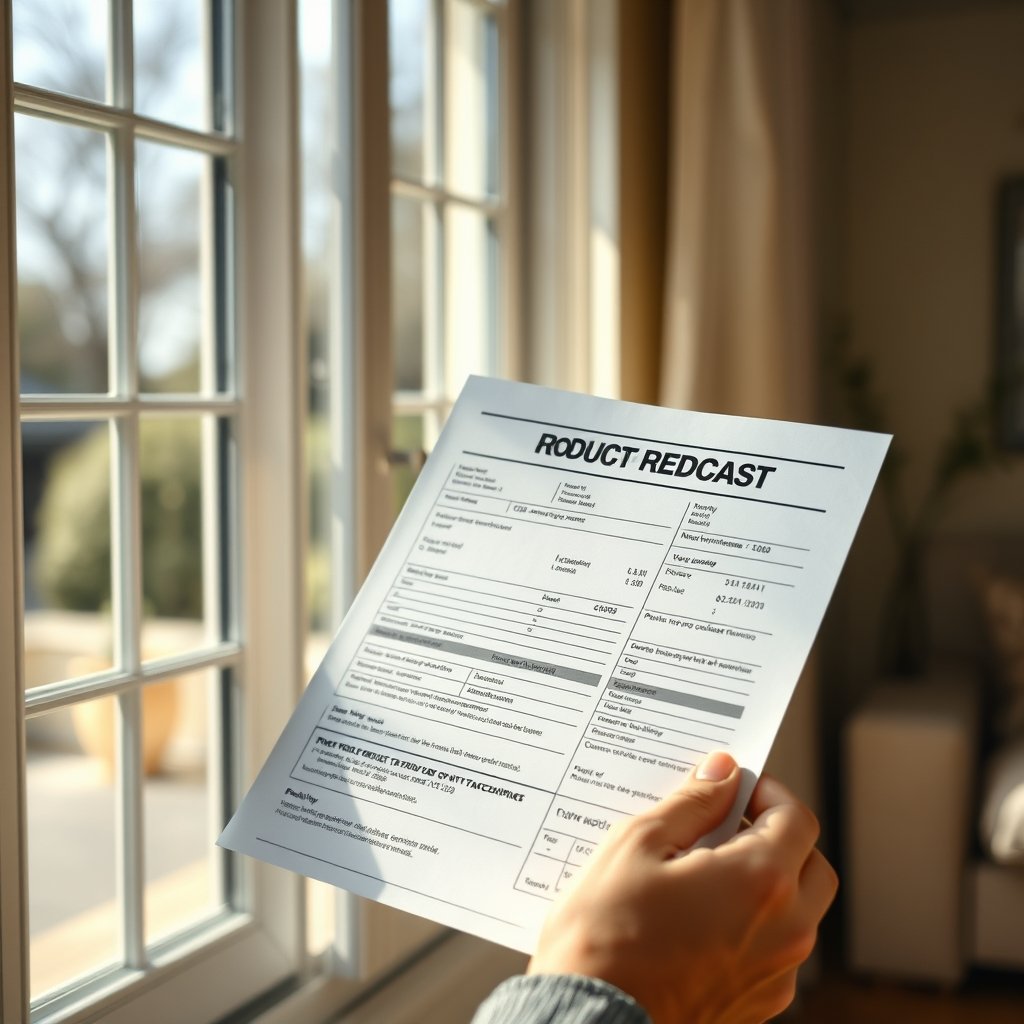
Still confused? For stepwise guides on energy upgrades and filing forms, see our tutorial: How to claim home energy tax credits the easy way.
Can You Stack the 2025 Federal Tax Credit with State or Local Rebates?
This is a smart way to cut costs, and many people overlook it: most state or local energy efficient window rebate programs can be combined (“stacked”) with the federal credit—unless the state or local rules say otherwise.
How does this work? Most local rebates are paid to you directly (not reported to the IRS). The key caveat: If a rebate actually reduces your out-of-pocket cost of the windows, you must base your tax credit on the net cost after rebates have been applied. For example, spend $2,000, get a $500 local rebate—claim the 30% on $1,500 ($450), not on $2,000.
Check the fine print on your local program (ask your installer or research your state’s energy office). For stacking these incentives, review the TurboTax home improvement tax credit overview and this ENERGY STAR rebate resource for up-to-date policies. If you’re navigating multiple programs, read our article on maximizing the Energy Efficient Home Improvement Credit.
Avoid These Common Window Tax Credit Mistakes (and Denials)
The IRS and ENERGY STAR warn that most denied claims (or months-long delays) happen due to a short list of mistakes. Avoid these:
- Using windows labeled only as standard ENERGY STAR, not “Most Efficient.” This is by far the top reason for claim rejection.
- Lack of manufacturer’s certificate—a common oversight. Receipts are not enough. You must have the certificate that shows the qualifying product identification number.
- Including installation or labor costs in your credit calculation. For windows, only the product material cost is eligible—not the cost to install.
- Applying for secondary, rental, or business properties. Only your main, owner-occupied home counts in almost every case.
- Missing the annual $600 cap: If you try to claim more, your credit will be limited and flagged.
| Mistake | What Happens | How to Prevent |
|---|---|---|
| Bought standard ENERGY STAR windows | Claim rejected; no credit granted | Double-check the “Most Efficient” certification and save the certificate document |
| Included installation/labor costs in total claimed | IRS reduces credit or flags for audit | Only enter product material costs on Form 5695 |
| No manufacturer’s certificate or missing product ID | Denied or delayed claim, possible audit | Request the certificate before purchase and save it with your tax docs |
| Claimed for second home, rental, or business | No credit; subject to penalties | Claim only for your principal residence |

See also our troubleshooting guide: How to fix denied home improvement tax credits.
What Happens After 2025? Expiration Dates & Future Outlook
If you’re hoping to wait or are still shopping: the Energy Efficient Windows Tax Credit 2025’s current version ends December 31, 2025. Congress could extend, modify, or replace it, but as of now, there’s no announced renewal. Once the deadline passes, late installations (even if purchased in 2025) will not qualify for any tax credit unless new law is passed.
If you might replace windows after 2025, consider:
- Tight timelines: Complete both purchase and installation by year-end 2025 to lock in the credit.
- Get on installer lists early: Year-end backlogs and material shortages are common with expiring incentives.
- Explore state and utility rebates: Some continue or change as federal programs lapse—see our resource on alternatives to federal energy credits for 2026 and beyond.
Real-Life Energy Savings—Are They Worth It?
So what do you actually save in energy bills? There’s no official, published “average” savings for 2025-eligible ENERGY STAR Most Efficient windows—your real-life result will depend on your home, climate, insulation, and current windows. For reference, ENERGY STAR reports 10–20% reductions in heating and cooling costs for high-efficiency window upgrades, but precise numbers vary and 2025 data is not published yet.
For homeowners in cold climates, lower U-factor windows can sharply cut winter heating bills. In hot regions, focusing on low SHGC values keeps cooling bills down. Even without an official government average, case studies and customer testimonials routinely cite hundreds per year in reduced utilities, though your mileage may vary.
Thinking of a full replacement versus just a few windows? See our analysis at Are energy efficient windows worth the investment?
Frequently Asked Questions (2025 Window Tax Credit Edition)
Can I claim the window tax credit for partial window replacement projects?
Yes, as long as the windows installed are ENERGY STAR Most Efficient certified and all other requirements are met. The $600 cap applies whether you replace one window or a dozen.
Are installation or labor costs included in the tax credit calculation?
No, only the cost of the window/skylight products themselves (materials) qualify for the credit—not installation, labor, or permits.
Can I use the credit for windows in a rental or business property?
No, the 25C tax credit windows provision applies only to owner-occupied primary residences in the U.S. Rentals and businesses are excluded.
What proof do I need if I’m audited for the window replacement tax credit 2025?
You must retain the manufacturer’s certification statement (with product ID), itemized purchase receipts, and documents showing installation date and property address.
If I get a state rebate and the federal credit, how is each calculated?
You must use your out-of-pocket window cost after state or local rebates to calculate your federal tax credit—no double dipping on the same dollars.
Conclusion
This year’s Energy Efficient Windows Tax Credit 2025 offers one of the best tools for trimming window replacement costs, but the hoops are higher and the deadline is firm. Check for the Most Efficient label, get your paperwork in order, and be sure to act before December 31, 2025—otherwise, you could miss out on up to $600 free from the IRS. Need help or want to optimize your project? Start by reviewing our resources on smart upgrade sequencing and home energy upgrade checklists to make the most of every dollar.