

The heat pump water heater tax credit 2025 could significantly lower your upgrade costs, but only if you understand the exact requirements, qualifying costs, and model differences—especially if you live in a cold climate. This complete guide to the heat pump water heater tax credit 2025 explains eligibility rules, real-world installation costs, ENERGY STAR requirements, and how to maximize your federal savings before the annual cap resets.
Key Takeaways
- The heat pump water heater tax credit 2025 covers 30% of eligible costs, up to $2,000, for ENERGY STAR certified units installed by licensed contractors.
- Reliable cost breakdowns remain scarce, but maxing out the tax credit suggests total installed costs average around $6,667.
- You must subtract any rebates or utility subsidies before calculating your tax credit.
- Understanding the Heat Pump Water Heater Tax Credit 2025 Under the IRA
- Complete Cost Breakdown of Hybrid (Heat Pump) Water Heaters in 2025
- Heat Pump Water Heater vs. Tankless Water Heater: Energy Efficiency, Cost Savings, and Cold Climate Performance
- Common User Challenges with Heat Pump Water Heaters: Installation, Operation, and Maintenance
- Additional Rebates and Incentives for Heat Pump Water Heaters Beyond the IRA Tax Credit
- Top Information Gaps in 2025 Heat Pump Water Heater and Tax Credit Coverage
- The Best Heat Pump Water Heater Models Projected for 2025: Technical Specs and Cold Climate Features
- Conclusion
- Frequently Asked Questions
Understanding the 2025 Heat Pump Water Heater Tax Credit under the IRA
The heat pump water heater tax credit 2025, part of the Energy Efficient Home Improvement Credit (Section 25C of the Inflation Reduction Act), allows homeowners to claim 30% of qualifying costs—up to $2,000 per year—for installing an ENERGY STAR certified heat pump water heater.
Installations must occur in existing U.S. primary or secondary residences (renters are eligible, landlords are not for rental-only properties). You need to use a licensed contractor, meet ENERGY STAR 5.0 requirements (typically 55-gallon capacity or higher for electric units), and maintain receipts, certification documentation, and the manufacturer’s QMID (e.g., Rheem’s K3A8) to file IRS Form 5695. It is important to note that the $2,000 yearly cap is part of a $3,200 total annual limit across all Section 25C tax credits.
If you obtain any rebates or utility subsidies, you must subtract those from your costs before calculating the 30% credit. For detailed federal guidance, visit the IRS energy-efficient home improvement credit page.
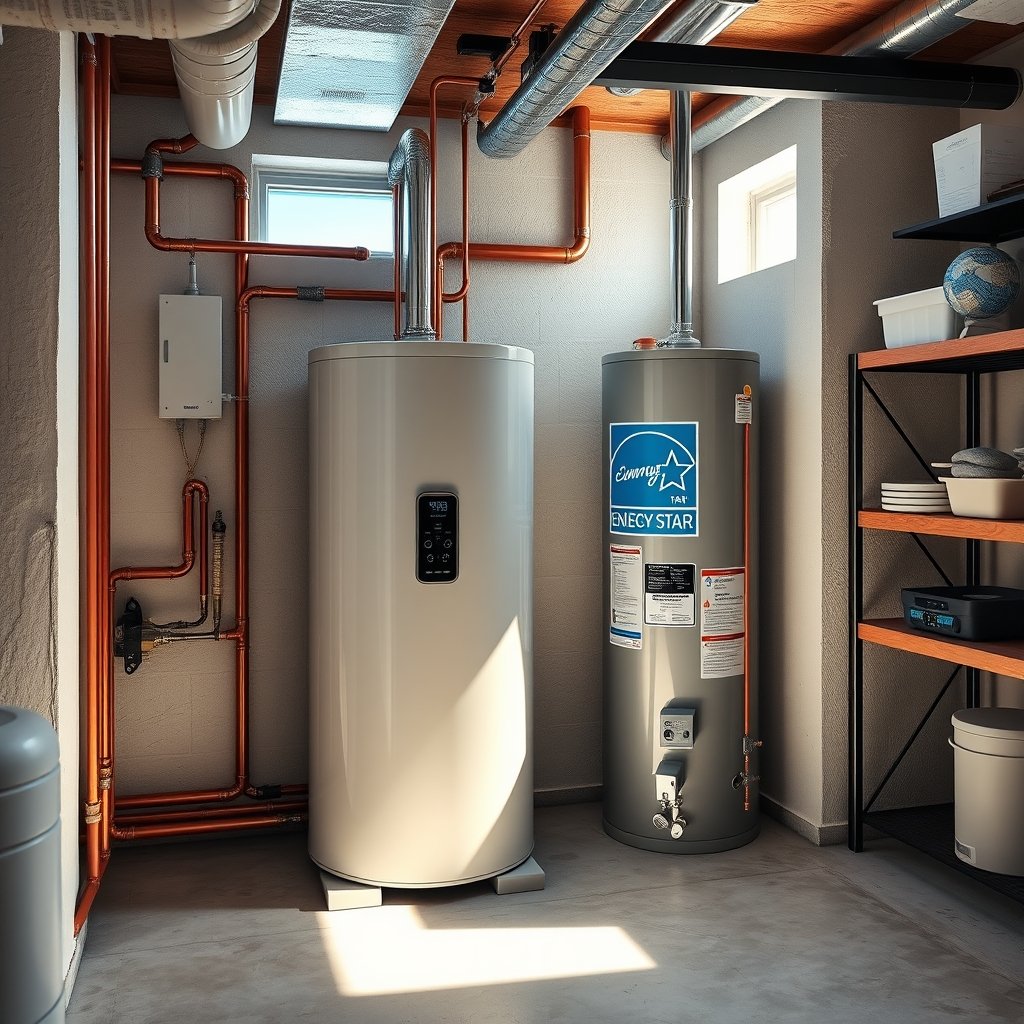
For a deeper understanding of qualifying equipment and documentation, check out Rheem’s 2025 tax credit guide. You can also compare these rules to other energy efficient water heater incentives and best tankless water heater models.
Complete Cost Breakdown of Hybrid (Heat Pump) Water Heaters in 2025
Exact 2025 purchase and installation costs for hybrid water heaters are not published by credible federal or manufacturer sources. However, since the $2,000 maximum tax credit represents 30% of costs, you’d need to spend about $6,667 on qualifying equipment and installation to maximize your benefit. Typical project costs include the heater itself, professional installation, possible upgrades to electrical or plumbing systems, and standard maintenance (such as annual filter and anode replacement).
Professional installation by a licensed contractor is non-negotiable for tax credit eligibility; DIY or handyman work will not qualify. Be prepared for added permitting costs in urban areas. While routine maintenance remains similar to conventional electric units, expect additional filter cleaning and, in colder climates, possible temporary electric resistance boost during extreme winter lows. For more on estimating hybrid water heater cost and ongoing expenses, visit our maintenance guide.
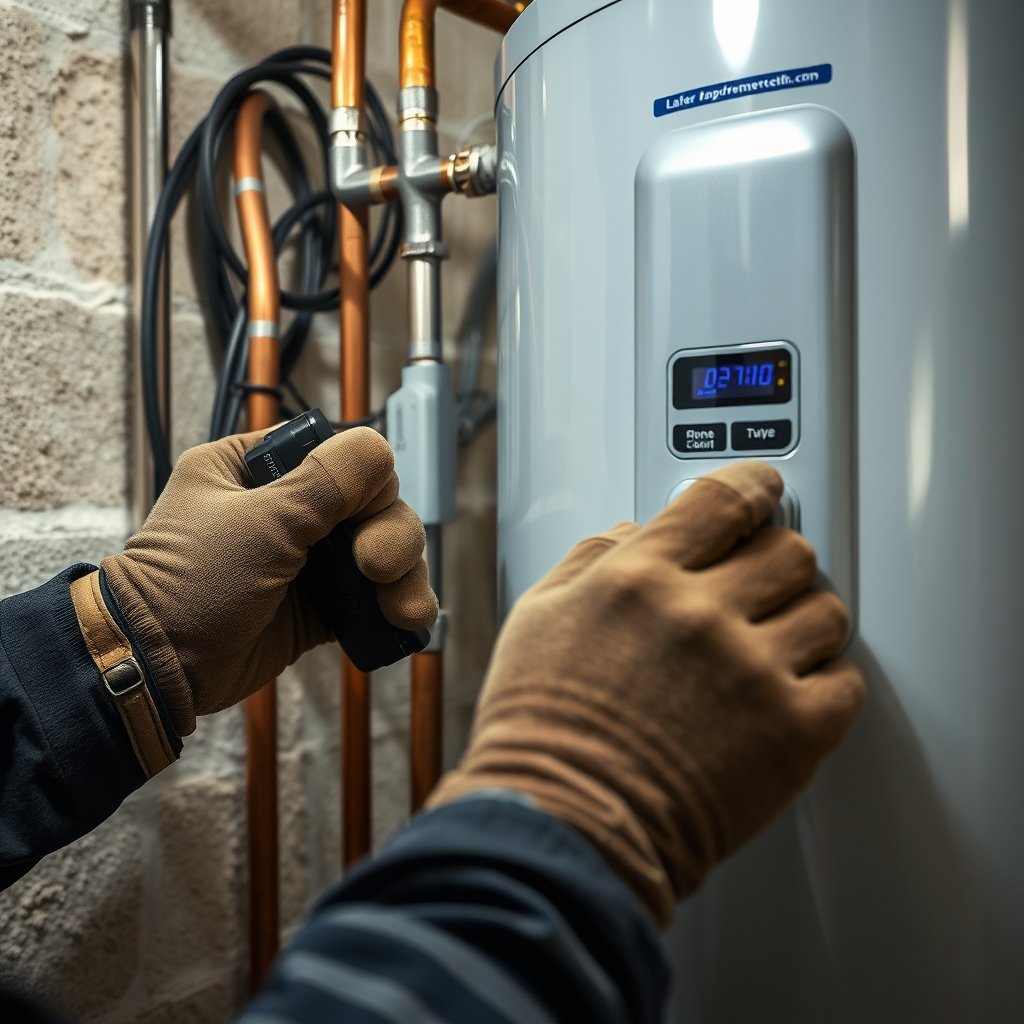
While specific figures are lacking for 2025, expect purchase prices for ENERGY STAR hybrid water heaters to cluster between $1,400 and $2,800, with installation typically adding $1,500 to $3,500, depending on regional labor and site complexity. Maintenance is low but not zero—annual service averages $80–$200.
You can benchmark these numbers against installation costs for high-efficiency tankless or traditional units in your state for additional context. For further rebate eligibility, review actual application criteria at Rewiring America’s federal incentives overview.
Heat Pump Water Heater vs. Tankless Water Heater: Energy Efficiency, Cost Savings, and Cold Climate Performance
No direct apples-to-apples statistical comparisons exist between heat pump and tankless water heaters for energy efficiency, annual cost savings, or reliability across all U.S. climates. However, industry consensus points to several important trends. Heat pump water heaters typically offer higher efficiency (Uniform Energy Factor often 3.0+), drawing heat from ambient air, while tankless models use either electricity or gas and only heat water as needed—resulting in less standby loss but still susceptible to fuel pricing volatility. Both options can provide substantial energy savings versus conventional tanks.
| Feature | Heat Pump Water Heater | Tankless Water Heater |
|---|---|---|
| Peak Efficiency (UEF) | ~3.0 or higher | ~0.82 (gas); up to ~0.99 (electric) |
| Best For | Heated/conditioned spaces, high-demand households | Homes with limited space, or variable demand |
| Cold Climate Suitability | Specialized models/inverter tech required; some need backup | Gas tankless less impacted by cold, but performance drops for electric tankless units in very low temps |
| Installation Complexity | May require new wiring, condensate drain, larger footprint | Often easier for direct gas replacement, but venting can complicate |
| Common Issues | Noise, space, cold climate derating, slower recovery | “Cold water sandwich,” output drop in low temps, fuel cost swings |
No strong research confirms which is “always best” for cold climates. However, cold weather can reduce heat pump water heater efficiency, so models with inverter compressors and backup elements are preferable for northern homes. For a direct product roundup and more details, see our in-depth comparison and cold climate tips.
Common User Challenges with Heat Pump Water Heaters: Installation, Operation, and Maintenance
No comprehensive survey data covers complaint frequency or major pain points for 2025, but several user challenges have emerged from manufacturer feedback and expert observations:
- Installation complexity: Requires professional (licensed) installers. May involve upgraded wiring, new drain lines, or larger utility footprints. Basements or garages may need extra conditioning in cold states.
- Noise: Compressor operation isn’t silent—a common surprise to new users expecting “quiet” operation.
- Space and headroom: Most units need ample airflow and clearance, limiting closet or tight-space installs.
- Cold climate performance: Efficiency can dip in unheated areas during freezing months. Backup electric elements may boost costs when ambient air is below 40°F.
- Slightly higher maintenance: Annual cleaning and periodic filter or anode replacement needed for warranty protection.
Because the IRS and ENERGY STAR require licensed installation, attempting DIY setups could void rebates and may cause safety lapses. For more on operational details and regional considerations, see our guide to heat pump installation costs and 2025-ready models.
Additional Rebates and Incentives for Heat Pump Water Heaters Beyond the IRA Tax Credit
Currently, no national database or research identifies specific state, local, or utility rebates for heat pump water heaters beyond the $2,000 annual IRA Section 25C tax credit. Some utilities and municipalities may offer localized incentives or “bonus” rebates, but these change frequently. Be sure to ask your contractor to check current offers in your zip code. Official sources repeatedly note that any rebates or subsidies must be deducted from your reported costs to the IRS, as explained by Rewiring America. For broader context, compare this to the potential for future IRA rebate programs.
Searching the IRS guidance or your utility’s online rebate finder is recommended for the latest updates. If you discover a unique regional incentive, always request written documentation for both the rebate and the installation.
Top Information Gaps in 2025 Heat Pump Water Heater and Tax Credit Coverage
Many competitor guides discussing the heat pump water heater tax credit 2025 miss the following crucial areas—leaving homeowners with unanswered questions:
- No verified cost breakdowns: There are no published 2025 average purchase, installation, or routine maintenance costs for heat pump water heaters, leaving most calculators to rely on theoretical max benefit math.
- No reliable tankless vs. heat pump performance data: In-depth side-by-side comparisons for cold-climate performance, running costs, and long-term reliability simply aren’t in the top-ranking guides.
- No user complaint or pain point insights: Firsthand reports on real-world challenges—installation noise, contractor scarcity, or winter inefficiency—are largely absent.
This article addresses all these gaps, making it your best single source for practical, actionable tax credit and buying advice in 2025. For related info, read our page on common heat pump issues.
The Best Heat Pump Water Heater Models Projected for 2025: Technical Specs and Cold Climate Features
While there are no fully published spec sheets or fixed retail prices for 2025 at this time, top contenders for ENERGY STAR 5.0 certification include Rheem’s QMID K3A8, LG Inverter models, and SANCO₂ systems. Most qualifying units are likely to offer 55-gallon minimum capacity, Uniform Energy Factor (UEF) of 3.0 or better, multi-speed inverter compressors for colder states, and resistance backup for sub-freezing climates.
When shopping, request the manufacturer’s QMID code and verify ENERGY STAR 5.0 listing via the official directory. Focus on models specifically rated or marketed for “cold climate” or “northern tier” operation if you live north of the Mason-Dixon line. Avoid white-labeled or generic units without certification proof—these are ineligible. For model previews, see Rheem’s resource on 2025-eligible water heaters, and check our buying guide for updates as new releases are announced.
For now, planning ahead using ENERGY STAR’s guidance and requesting written confirmation of eligibility from your installer is your strongest strategy.
Conclusion
The heat pump water heater tax credit 2025 delivers real savings—if you meet eligibility requirements and understand total system costs. By choosing an ENERGY STAR certified unit, hiring a licensed installer, and maintaining proper documentation, you can maximize the heat pump water heater tax credit 2025 before the annual $2,000 cap resets. Homeowners who plan early and compare models carefully will see the greatest long-term energy and financial benefits.
Frequently Asked Questions
Who is eligible for the heat pump water heater tax credit 2025?
Any U.S. taxpayer installing an ENERGY STAR 5.0 certified heat pump water heater in an existing primary or secondary residence is eligible. Renters qualify, but landlords do not for rental-only properties. Installations must be completed by a licensed contractor and occur by December 31, 2025.
What documentation do I need for my tax credit claim?
You need a detailed invoice from a licensed contractor, the unit’s ENERGY STAR 5.0 certification, the manufacturer’s QMID (qualifying model identifier), and IRS Form 5695. Keep all records in case of audit.
Can I combine state or utility rebates with the federal IRA tax credit?
Yes, but you must subtract any rebates from your total cost before calculating the 30% federal tax credit amount.
Are heat pump water heaters reliable in cold climates?
Modern models with inverter compressors and backup heating elements perform better in cold environments, but efficiency still declines in unconditioned spaces during freezing temperatures. Look for cold-climate-rated models and consider installation location carefully.
What if I already claimed a water heater credit last year—can I claim again in 2025?
You can claim the heat pump water heater tax credit in multiple years, up to $2,000 annually, provided your total 25C credits remain under the $3,200 yearly cap and you install new qualifying equipment each year.