

Small kitchen organization ideas are in higher demand than ever as kitchens keep shrinking and households need space that flexes with daily life. If you feel like every cabinet is packed and nothing stays tidy, you’re not alone—let’s look at how to unlock real storage, not just shuffle the clutter around.
Key Takeaways
- Single-wall and adaptable kitchen layouts are booming, making innovative, accessible storage crucial for daily efficiency.
- Overlooked strategies like hidden pantries and phased, renter-friendly solutions can fit any budget and living situation.
- Maximizing perceived space, not just storage, is key to making a compact kitchen feel functional and welcoming.
- Why Small Kitchen Space is a Growing Challenge in 2024
- Step-by-Step Guide: Actionable Organization for Any Kitchen
- Advanced Analysis & Common Pitfalls
- Conclusion
- FAQs
Why Small Kitchen Space is a Growing Challenge in 2024
Small kitchen organization ideas matter more than ever because kitchen footprints in US homes, especially apartments and condos, keep getting smaller. Throughout 2024, the surge in one-wall kitchen layouts has risen by 170%, according to NAR.realtor. This trend is driven by downsizing, the popularity of flexible, open-concept homes, and the need to combine prep, cooking, and living zones. For both renters and owners, optimizing every inch is more than just “organizing”—it’s vital for functionality, hygiene, and mental clarity.
The best small kitchen organization ideas focus on flexibility, accessibility, and making tight layouts work smarter—not harder.
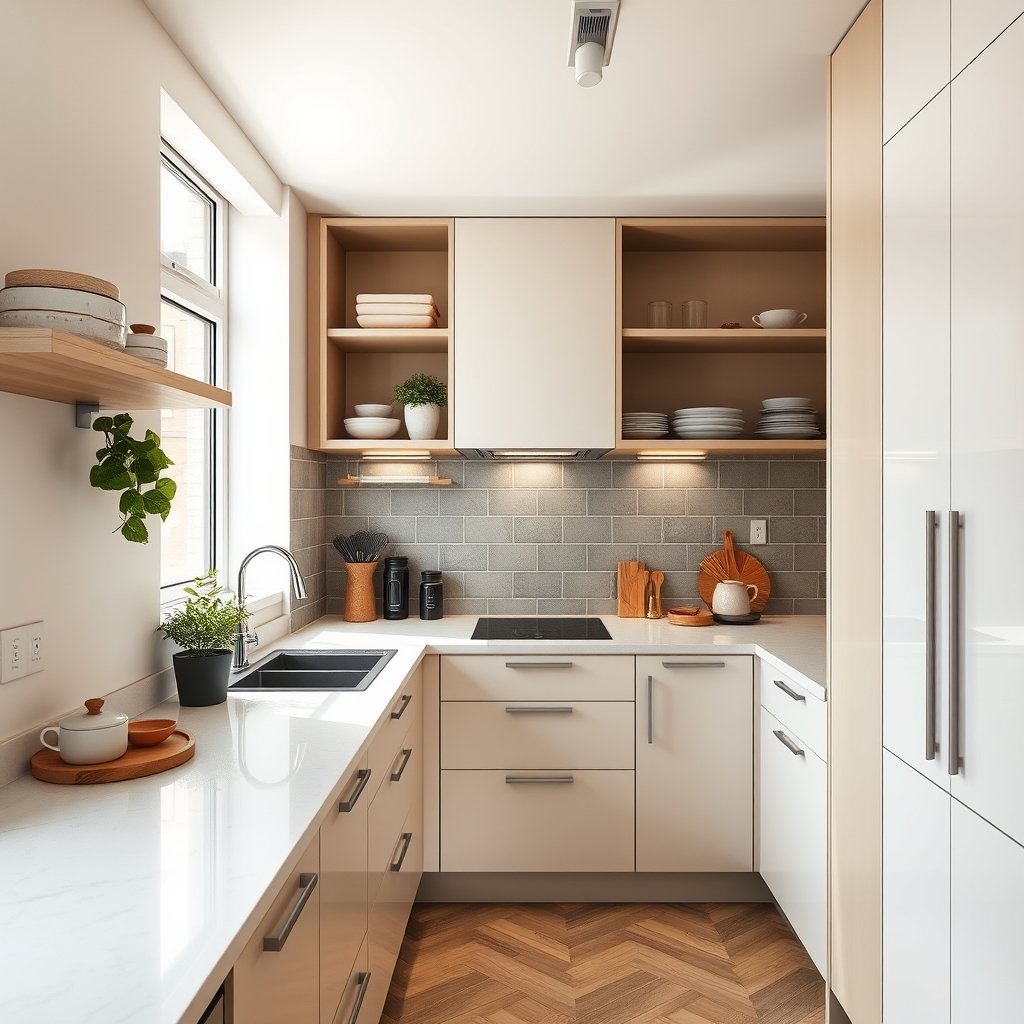
But “just declutter” doesn’t help if you’ve already pared down what you own. Instead, real improvements focus on:
- Letting storage adapt to your changing needs (from baking marathons to quick coffee stops).
- Meeting the needs of growing families, multigenerational households, and accessibility requirements.
- Working with limited budgets while keeping spaces flexible for renters and owners alike.
Whether you want the best storage solutions for small kitchens or tips for simply seeing more open countertop, we’ll cover the overlooked strategies making a real difference this year.
Step-by-Step Guide: Actionable Organization for Any Kitchen
These small kitchen organization ideas are designed to work in apartments, condos, and compact homes without requiring a full remodel.
Organizing a small kitchen isn’t about buying all new containers—it’s about targeting inefficiencies, using overlooked spaces, and choosing solutions that work whether you’re renting or an owner. Here’s a proven step-by-step sequence that adapts to your kitchen’s quirks:
- Assess Your Layout Critically
- Measure all wall, floor, and cabinet space. Note walkways—can you widen any area (even by shifting a trash bin)?
- Look closely at where clutter gathers—those are your weak points, and fixing them brings the most impact.
- See if your appliances can be grouped or stacked—renters can use rolling carts or slim baking racks as temporary zones.
- Prioritize Accessible Storage
- Don’t just use high shelves and call it “organized”—keep daily items at arm’s reach, and only store occasional tools up high.
- Install or add shelf risers, lazy Susans, or front-facing bins inside deep cabinets for easy grab-and-go.
- Swap fixed shelving for pull-out solutions or organizers if possible, even on a budget.
- Embrace Concealed Pantries or Workstations
- Convert a tall cabinet or even an Ikea wardrobe into a “super pantry”—a hidden spot for small appliances, snacks, or a compact coffee bar.
- Use adhesive hooks or tension rods behind doors to stash cutting boards and utensils.
- Look for underutilized corners: corner lazy Susans, deep rolling drawers, or slim slide-out pantries are game-changers.
- Consider internal cabinet organizers that can be added or removed without drilling—for renters this is key.
- Phase Upgrades for Budget and Flexibility
- Start with low-cost, high-impact fixes like drawer dividers, risers, or magnetic strips for knives and tools.
- Next, invest in modular systems or rolling furniture that move with you or adapt as family needs grow.
- Use sustainable and easy-clean materials like quartz offcuts, acrylic bins, or even plywood inserts for durability without major expense.
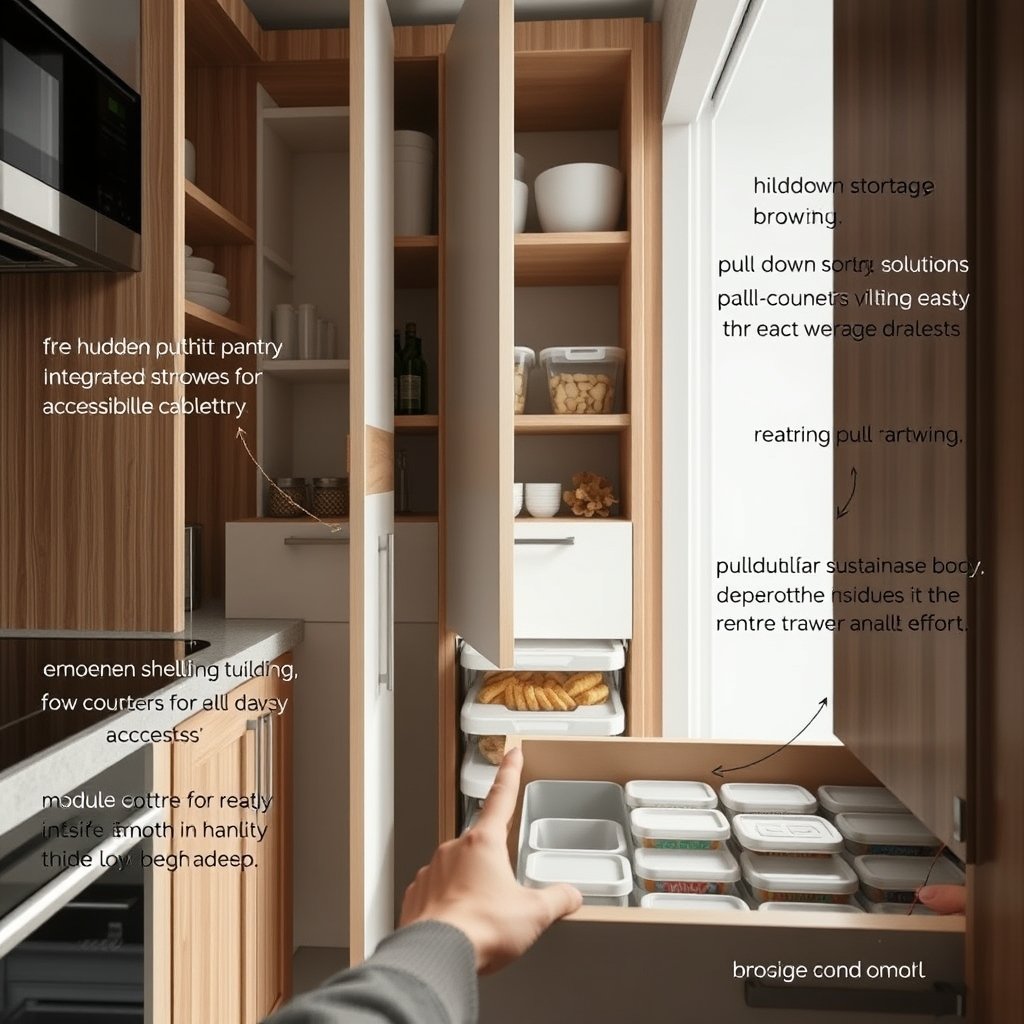
Move through these improvements in phases. Start with the elements that cause daily annoyance (like crowded drawers or a lack of prep space) and work toward bigger, more permanent upgrades over time. For additional options, see our Best Small Kitchen Storage Solutions and How to Organize Kitchen Countertops Like a Pro guides.
Advanced Analysis & Common Pitfalls
Even the most practical small kitchen organization ideas can fail if they don’t match your layout or daily habits.
Most articles on small kitchen organization ideas gloss over some very real obstacles. Here’s an honest look at what can go wrong, what to avoid, and how to adjust strategies for your kitchen, whether you rent, own, or share the space:
Common Pitfalls by Storage Solution
| Solution | Potential Problem | Who Should Be Careful |
|---|---|---|
| Open Shelving | Amplifies visible clutter and collects dust easily. Adds style but can feel messy fast if items pile up. | Anyone who dislikes frequent tidying, renters who can’t drill |
| Pull-Out Shelving | Great for access; may not fit standard cabinets or inexpensive flat-pack kitchens. Can reduce storage if not chosen carefully. | Homeowners, renters with landlord approval |
| Deep Drawers | Can “swallow” small tools or food unless organized with dividers; cheap models sometimes jam or break with heavy use. | Busy families, heavy cooks |
| Magnetic/Stick-On Organizers | Sometimes peel off or shift, especially with frequent door use or humidity. Not always as secure as mounted options. | Renters seeking no-damage installs |
| Hidden Pantries/Workstations | Can be expensive and require careful measurement; may not always ventilate appliances adequately. | Owners, ambitious DIYers |
What the Data Shows (and Doesn’t)
- Standard cabinets—used as-is—fail to resolve clutter or make appliances accessible, a top renovation driver in 29% of kitchen remodels (NatLawReview.com).
- Open shelving can make spaces feel “bigger” but may increase daily cleaning needs and looks cluttered unless well-maintained (ElevationsbyHines.com).
- Homeowners often invest in custom, permanent options. Renters favor temporary, modular, or non-damaging solutions. DIY store-bought upgrades—like risers, bins, and baskets—are up 2% annually as remodels become less affordable (NKBA).
- Small kitchens under 100 square feet do best with seamless, easy-clean surfaces like quartz, and with storage installed at accessible heights (ElevationsbyHines.com).
Linking Practical Resources
- Get more renter-friendly organization ideas in our Renter Kitchen Hacks roundup.
- See step-by-step DIY pull-out shelf installation, including measurements and material choices, in How to Make Pull-Out Shelves for Small Kitchens.
- For a compare-and-contrast on deep drawers vs. open shelving, read Open vs. Closed Storage: Which Suits Your Kitchen?.
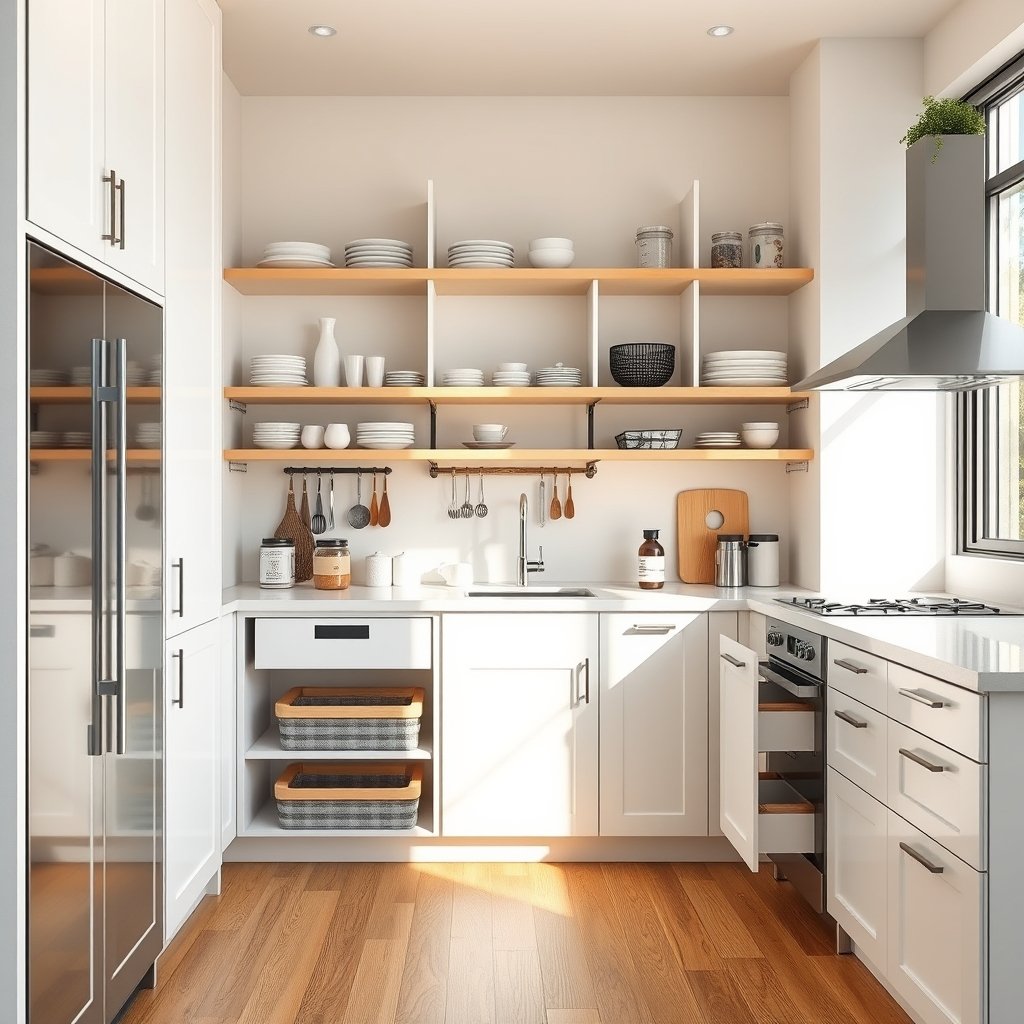
The most successful small kitchen organization ideas balance hidden storage, easy access, and visual simplicity.
Conclusion
With the right small kitchen organization ideas, even the tightest spaces can feel bigger, more efficient, and less stressful.
Ready to tackle your own kitchen? Make a list of “pain points,” measure your space, and start with one affordable solution this month. For room-by-room strategies, check out more kitchen organization resources right here.
FAQs
What’s the first thing I should organize in a small kitchen?
Start with the places where clutter accumulates most: usually drawers, countertop corners, or the cabinet under the sink. Clearing these frees up space and makes every other upgrade more effective.
Are there organization products that work for renters without drilling?
Yes—look for tension rod shelves, stick-on or magnetic under-shelf baskets, and magnetic knife strips. These add storage without damaging cabinets or walls and can be removed when you move out.
How much should I budget for small kitchen storage upgrades?
DIY and store-bought organizers can start under $50 for basics and range to $300–$500 for larger modular pieces or rolling carts. Full kitchen remodels average $24,000, so most households are opting for phased, small investments instead.
Do open shelves actually make kitchens feel bigger?
They can—open shelving draws the eye outward and creates an airy look, but if you keep too much visible or skip regular cleaning, it may quickly feel cluttered instead. Pair open shelves with bins or baskets for best results.
What materials hold up best in small, active kitchens?
Non-porous quartz, seamless laminate, and easy-clean acrylic or metal bins all stand up to heavy use, resist stains, and require minimal upkeep in tight spaces.